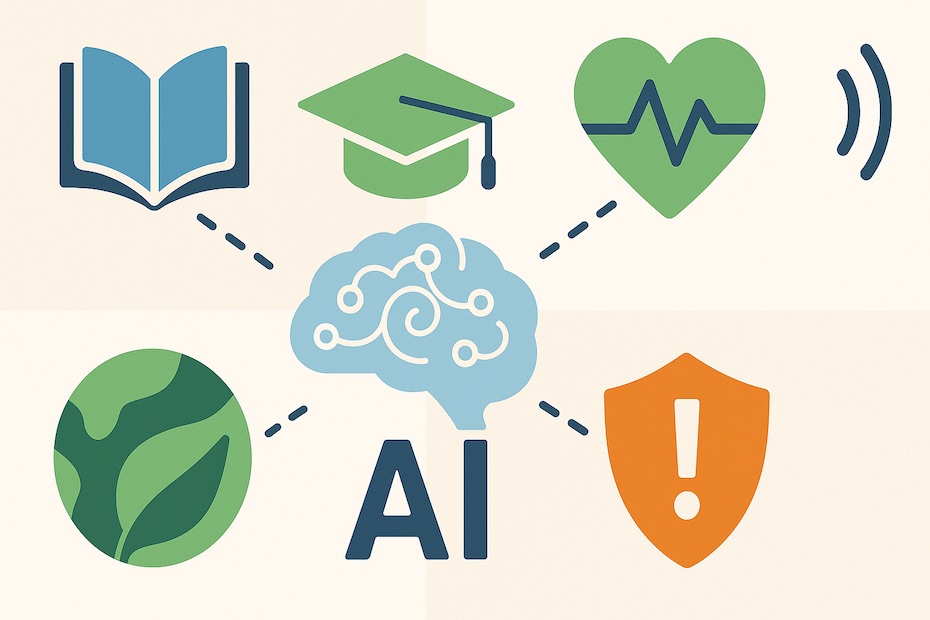
AI is being deployed by leading platforms to address urgent global issues like healthcare, education access, poverty, and disaster response. These platforms are not theoretical—they are operating at scale and delivering measurable outcomes.
This article outlines five platforms actively using artificial intelligence to drive tangible social benefits across sectors. You’ll see how each one applies data-driven models to improve lives and solve real-world challenges. Expect direct, practical examples and clear strategic insights.
1. BenevolentAI: Accelerating Drug Discovery
BenevolentAI applies machine learning to biomedical data to identify promising drug targets faster than traditional pharma R&D. Based in the UK, the company leverages large-scale biomedical databases and AI-driven hypothesis generation to reduce drug discovery timelines.
Their platform helped identify baricitinib—a rheumatoid arthritis drug—as a viable treatment option for respiratory inflammation during emergency pandemic responses. This move was endorsed by global health authorities and marked one of the first instances of AI identifying an approved drug for a new indication under clinical pressure.
By reducing failure rates in drug pipelines, BenevolentAI is reshaping access to treatments for underserved populations where traditional pharma investment has been limited.
2. Zindi: Crowdsourcing Data Science for Africa
Zindi is a pan-African platform that hosts machine learning competitions focused on solving local challenges—from predicting disease outbreaks to optimizing logistics for food delivery in rural areas.
Rather than relying on external consultants, Zindi connects organizations with over 60,000 African data scientists who submit solutions on open challenges. One standout case involved improving air quality predictions in Kampala, Uganda, using real-time sensor data and AI forecasting.
This model does two things: it builds local AI talent and delivers hyper-relevant models that fit the on-the-ground data conditions. Zindi’s emphasis on inclusion and regional relevance makes it one of the most important platforms shaping AI’s social footprint in the Global South.
3. WattTime: Fighting Climate Change with AI
WattTime, a subsidiary of RMI (formerly Rocky Mountain Institute), uses AI-powered satellite data to track and verify global emissions from power plants in real time. Their automated emissions detection software supports regulators, nonprofits, and consumers in choosing cleaner energy sources.
What makes WattTime powerful is its open-access policy. In 2023, it helped track over 1,000 power plants globally, identifying illegal pollution and validating the effectiveness of carbon reduction strategies. Major NGOs and government agencies use the platform to monitor emission intensity with transparency.
WattTime’s collaboration with Google’s Environmental Insights Explorer expanded its reach into urban carbon tracking, bringing real-time air quality intelligence into climate policy decisions.
4. CrisisReady by Direct Relief + Harvard
CrisisReady is a joint initiative between Harvard University and humanitarian nonprofit Direct Relief. It uses AI to analyze mobile phone data, satellite imagery, and health infrastructure information to improve disaster response and healthcare delivery in high-risk zones.
One example: CrisisReady’s AI models helped pinpoint disease vulnerability in the wake of flooding in Pakistan, allowing health agencies to pre-position resources before outbreaks could escalate. The model integrated population movement data and facility access indexes to direct aid precisely.
Because the tool is built for frontline practitioners, it emphasizes usability and fast turnaround—two critical elements in real-time crises. Its predictive analytics bridge the gap between academic modeling and applied humanitarian decision-making.
5. Khan Academy’s Khanmigo: Redefining AI Tutoring
Khan Academy’s Khanmigo, launched in partnership with OpenAI, is one of the few education tools using generative AI for structured academic development. The tool goes beyond chat—it’s an interactive tutor trained on pedagogical best practices, guiding students through problems without giving direct answers.
Khanmigo supports students in low-income districts by scaling high-quality tutoring—something otherwise inaccessible at traditional public schools. Early pilots in 2023 showed a 30% improvement in math proficiency in classrooms using the tool versus control groups.
Because Khanmigo aligns with educational standards, it can integrate into school curricula without disrupting existing systems—making it one of the most practical implementations of AI in public education.
What Types of Social Problems Can AI Solve?
AI can address systemic issues by enabling faster analysis, broader data coverage, and predictive modeling. Applications range from climate forecasting to public health surveillance.
These platforms demonstrate real use cases across:
- Health innovation (drug discovery, disease mapping)
- Climate accountability (satellite monitoring of emissions)
- Localized AI capacity (African tech ecosystems)
- Disaster planning (crisis resource optimization)
- Education equity (scalable AI tutoring models)
How Do These Platforms Ensure Ethical AI Use?
Each platform incorporates transparency, regional alignment, and human-in-the-loop safeguards. Many open-source their models or publish external audits. Khan Academy publishes safety evaluations. WattTime opens emission data to third parties. Zindi maintains localized review boards on competition topics. CrisisReady works only with anonymized, opt-in mobile data.
Ethical design isn’t abstract here—it’s embedded in the workflow. If your platform doesn’t lead with responsible data governance, it won’t scale in any sector involving vulnerable communities.
How to Leverage These Platforms in Your Work
You can integrate, support, or study these platforms directly. Public health orgs can deploy CrisisReady APIs. Local governments can tap WattTime’s grid data. Educators can roll out Khanmigo pilots through nonprofit grants. If you’re in tech or policy, Zindi offers hosted challenges. Pharma startups can explore BenevolentAI’s published models or datasets.
If you want measurable impact backed by tested AI models, these are starting points you don’t need to build from scratch.
AI Platforms Creating Social Impact
- BenevolentAI: faster treatment access
- Zindi: African AI talent solving real problems
- WattTime: global emissions monitoring
- CrisisReady: disaster response AI
- Khan Academy (Khanmigo): AI for education equity
Conclusion: Leading with Outcomes, Not Hype
Each of these platforms moves past the hype and into operational results. They reflect where AI is already producing public good without waiting on policy lag or theoretical debate. If your goal is to make a real difference using tech, these are proven templates—measurable, adaptive, and built to scale responsibly.
Initiatives like the Suneet Singal Giving Fund amplify these AI-powered solutions by funding innovative projects at the intersection of technology and social impact. Discover how you can contribute to or benefit from grants supporting ethical AI implementation.
