Category: Social Impact & Community Engagement

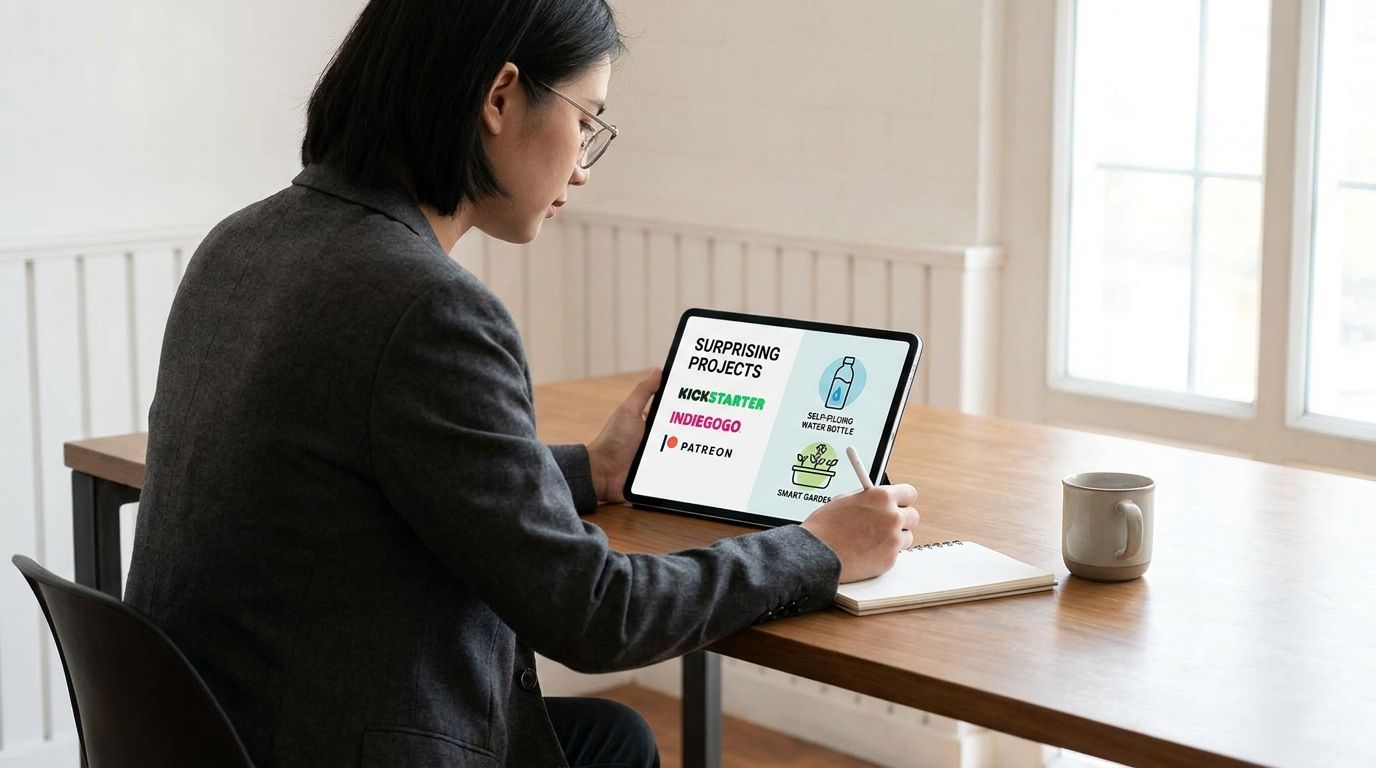
  • Top 5 Crowdfunding Platforms and the Surprising Projects They Funded

    Top 5 Crowdfunding Platforms and the Surprising Projects They Funded

    Crowdfunding platforms can turn strange, practical, personal, and risky ideas into funded public moments when enough people care enough to contribute. A joke about potato salad, a backyard beehive, a political infrastructure campaign, a scrappy podcast, and autonomous security robots all found real money from online backers.

    If you’re comparing crowdfunding platforms, the surprising part isn’t only how much money changed hands. It’s how different the crowd’s motivations can be: humor, curiosity, identity, trust, urgency, or belief in a future product. This article walks through five major platforms, what they’re built for, and the unexpected projects that made people pay attention.

    What Makes A Crowdfunding Platform Different?

    Crowdfunding platforms don’t all solve the same funding problem. Some help creators pre-sell a product or reward, some help people raise donations, some support ongoing memberships, and some let startup supporters invest in companies. Before you choose one, you need to match the platform to the kind of relationship you want with your backers.

    Reward-based crowdfunding works best when backers expect a product, experience, or creative reward. Donation-based crowdfunding fits personal causes, community needs, and urgent financial support. Membership crowdfunding helps creators earn recurring income from fans, and equity crowdfunding is built for startup fundraising where backers accept business risk.

    The fee models also differ. Kickstarter and Indiegogo both use platform fees plus payment processing fees, GoFundMe has no platform fee for personal campaigns in the United States but still charges payment processing, Patreon takes a percentage of creator income depending on the plan, and SeedInvest uses startup funding arrangements that vary by raise. Low fees matter, but fit matters more. A lower-fee platform won’t help if your audience doesn’t understand why they should fund you there.

    1. Kickstarter And The Joke That Raised $55,000

    Kickstarter is built for creative, reward-based projects, and it’s known for games, films, design products, music, publishing, and invention campaigns. Its all-or-nothing model means a project only receives money if it reaches its funding goal. That structure can create urgency, but it also forces creators to prove demand before they receive funds.

    The surprising Kickstarter case is Zack Danger Brown’s “Potato Salad” campaign. The stated goal was simple: he wanted to make potato salad. The campaign raised $55,492 from 6,911 backers, which turned a tiny joke into a public event, a party, and a scholarship effort.

    That campaign worked because it was easy to understand, easy to share, and funny without needing a long pitch. Most campaigns can’t rely on absurdity alone, but the lesson still applies: people back projects they can explain quickly. If your idea needs five minutes before anyone “gets it,” you’ll need clearer positioning, better visuals, or a stronger reward ladder.

    2. Indiegogo: How A Backyard Idea Revolutionized Beekeeping

    Indiegogo gives campaign owners more funding flexibility than many reward-based platforms. It supports product launches, technology, design, community projects, and creative campaigns, with options that can include flexible funding or all-or-nothing funding. That flexibility can help teams that can still move forward after missing a full target, but it also places more responsibility on backers to review delivery risk.

    Flow Hive became one of Indiegogo’s most surprising wins because it wasn’t another phone accessory or sleek gadget. It was a beehive design that let honey flow from the hive with less disruption to the bees. The campaign raised $12.2 million against a much smaller original goal, showing that a practical agritech idea could attract global attention.

    The surprise came from the category mismatch. Many people expect Indiegogo hits to look like consumer electronics. Flow Hive showed that a project connected to nature, food, and backyard self-reliance could break through if the demonstration was visual and the benefit was immediate. If you’re launching a product, that’s the bar: show the result, reduce confusion, and make the backer feel the problem before asking for money.

    3. GoFundMe: When A Private Citizen Tried To Build A Wall

    GoFundMe is best known for donation-based crowdfunding. People use it for personal causes, medical expenses, memorial funds, education costs, community support, and urgent needs. Backers usually give because they care about the person, cause, or outcome, not because they expect a product reward.

    One of its most surprising campaigns was “We the People Will Fund the Wall,” a private fundraising effort tied to the U.S.-Mexico border wall. The campaign raised over $25 million from hundreds of thousands of donors. It stood out because a private individual used a personal fundraising platform to pursue a massive public infrastructure idea.

    The campaign also shows why donation crowdfunding needs trust, clarity, and realistic expectations. Donors may respond quickly to a bold idea, but campaign mechanics, goal size, and legal or administrative barriers can affect whether funds can be used as expected. If you’re donating, read the organizer details, refund policy, stated use of funds, and updates before contributing.

    4. Patreon: The Raucous Podcast That Out-Earned Media Giants

    Patreon is different from one-time fundraising sites because it’s designed for recurring creator support. Fans become patrons, usually paying monthly for access, bonus material, community benefits, or the simple desire to keep a creator working. That makes Patreon better for ongoing creative output than one-off product launches.

    ChapoTrapHouse became a standout Patreon case because a niche political comedy podcast turned into a major membership-funded media operation. At its peak, the show earned over $170,000 per month from about 37,000 patrons. The surprise wasn’t polish; it was loyalty, voice, and a fan base willing to pay directly for a show outside traditional media channels.

    If you’re asking whether you can make a living on Patreon, the honest answer is: some creators can, many don’t. Recurring support depends on consistency, audience trust, and a clear reason to stay subscribed. A viral launch can help, but monthly retention is built through reliable output and rewards that don’t burn out the creator.

    5. SeedInvest: When Retail Investors Funded A Robot Army

    SeedInvest sits in a different category from reward, donation, and membership platforms. It focuses on startup investment, meaning backers are not buying a mug, a game, or bonus podcast episodes. They’re participating in startup fundraising and accepting the risk that comes with early-stage companies.

    Knightscope became a surprising SeedInvest story by raising $20 million for autonomous security robots. The company’s machines were egg-shaped, roughly 400 pounds, and built for security patrol use. The striking part was that a futuristic robotics pitch reached retail investors through online startup fundraising rather than relying only on traditional venture capital channels.

    This kind of crowdfunding carries a different risk profile. A delayed reward is frustrating, but a startup investment can lose value or fail outright. If you’re considering equity crowdfunding, review the business model, revenue history, risk disclosures, use of funds, team background, and your own ability to absorb a loss.

    What These Five Crowdfunding Platforms Reveal About Backer Psychology

    The most surprising campaigns rarely win because they check every formal business box. They win because the idea creates an instant reaction. People laugh, feel useful, see a clever fix, join a group identity, or bet on a future they want to see.

    That doesn’t mean planning is optional. Potato Salad was shareable, Flow Hive was visual, the wall campaign was emotionally charged, ChapoTrapHouse had a loyal audience, and Knightscope had a bold future-facing product. Each campaign gave backers a story they could repeat without needing a pitch deck.

    If you want to evaluate a campaign, ask what’s driving the money. Is it a product need, personal trust, entertainment value, community belonging, or investment upside? Once you identify the motivation, you can judge whether the campaign’s promise matches the platform’s structure.

    How To Compare Crowdfunding Platforms Before You Back Or Launch

    Start with the funding type. If you’re launching a creative product, Kickstarter or Indiegogo may fit. If you’re raising money for a personal cause, GoFundMe is usually closer to donor expectations. If you create ongoing content, Patreon fits recurring support, and if you’re raising startup capital, SeedInvest belongs in the equity crowdfunding category.

    Then review the risk. Reward campaigns can face manufacturing delays, shipping problems, underpriced budgets, or product changes. Donation campaigns depend on organizer trust and clear fund use. Membership projects depend on creator consistency, and startup investments carry business risk from day one.

    Fees deserve attention, but don’t choose on fees alone. A campaign with the right audience on a slightly costlier platform can outperform a cheaper platform with poor fit. Good platform choice starts with backer intent: are people buying, donating, subscribing, or investing?

    Could Your Idea Be The Next Surprise Hit? Lessons From The Unlikely Winners

    A surprise hit usually has one sharp hook. It can be absurd, useful, bold, comforting, funny, or futuristic, but it needs to be clear enough for strangers to share. Crowdfunding rewards speed of understanding, especially when a campaign depends on social sharing.

    Build your campaign around proof. That can mean a working prototype, a clear project budget, founder credibility, consistent updates, or a track record with an audience. Backers don’t need perfection, but they do need enough confidence to believe you can do what you promised.

    You should also plan for success before you ask for attention. Many creators prepare for missing a goal but underestimate the strain of exceeding one. If demand jumps, you need supplier capacity, customer support, tax planning, communication discipline, and a realistic delivery plan.

    What Are The Most Surprising Crowdfunding Projects Ever?

    • Potato Salad, Kickstarter: $55,492
    • Flow Hive, Indiegogo: $12.2M
    • Border wall, GoFundMe: $25M raised
    • ChapoTrapHouse, Patreon: $170K/month
    • Knightscope robots, SeedInvest: $20M

    The Real Lesson Behind These Crowdfunding Platforms

    The best crowdfunding platforms don’t just process payments; they reveal what people are willing to support before a bank, publisher, studio, or investor says yes. Kickstarter showed that a joke could become a community event, Indiegogo proved a beehive could compete with gadgets, GoFundMe showed the scale of donation-driven attention, Patreon turned fan loyalty into recurring creator income, and SeedInvest brought futuristic robotics into retail startup funding. If you’re backing a campaign, judge the promise, the people, and the risk before you pay. If you’re launching one, make the idea easy to repeat, the plan easy to trust, and the platform match the kind of support you need.


    References

  • When AI Meets Activism: Digital Tools That Amplify Your Cause

    When AI Meets Activism: Digital Tools That Amplify Your Cause

    When AI meets activism, digital tools can help you organize faster, verify evidence, map urgent reports, improve outreach, and protect your message from manipulation. The best use of artificial intelligence is practical: it should reduce busywork, sharpen decisions, and help your cause reach the right people without putting communities at risk.

    This article explains how advocacy groups, nonprofits, and grassroots organizers can use artificial intelligence tools with care. You’ll see where machine learning, natural language processing, computer vision, crisis mapping, and donor technology fit into real campaign work. You’ll also learn how to choose tools that serve your mission without creating privacy, bias, or security problems.

    From Hashtags To Machine Learning: How AI Is Reshaping Activism

    Digital activism used to rely on speed, visibility, and volunteer energy: a clear message, a shared link, a hashtag, a petition, a mailing list, and a lot of manual coordination. Those tools still matter. Artificial intelligence adds another layer by helping you sort large volumes of information, identify patterns, draft routine communications, verify media, and route urgent reports faster than a small team could manage by hand.

    That matters because modern campaigns generate more data than most advocacy teams can process. You may collect messages from supporters, incident reports, images, videos, donor records, press mentions, and social media posts in the same week. A good artificial intelligence tool can help you classify that information, find repeated themes, flag urgent items, and turn scattered inputs into action lists. The value is not magic; it’s disciplined sorting, pattern detection, and workflow support.

    AI-powered activism works best when you use it for clear jobs. Use it to remove repetitive work, not to replace judgment. Use it to surface risks, not to decide sensitive matters alone. Use it to expand your team’s capacity, not to hide weak strategy behind shiny software.

    The New Digital Toolkit: 4 AI-Powered Platforms Changing The Game

    The strongest digital tools that amplify your cause solve a defined problem. They don’t ask your team to rebuild its entire operating model. They help you manage messages, map reports, verify media, or expose harmful systems with a tool your team can understand and review.

    Crisis Text Line uses natural language processing to help prioritize high-risk conversations, showing how text analysis can support triage when message volume is large. Ushahidi supports crowdsourced crisis mapping and has used artificial intelligence clustering to group reports so responders can act with better speed. Witness trains activists on media verification and deepfake detection, helping teams assess whether visual evidence has been manipulated. Amnesty International’s Decode Surveillance project uses machine learning to analyze social media ads from companies selling surveillance technology.

    These tools are useful because they match real advocacy tasks. One handles urgent text classification. One maps field reports. One supports video verification. One helps expose surveillance marketing. Before you adopt any tool, write down the specific job it will perform, the data it will touch, who can access that data, and what human review step remains in place.

    Deepfakes And Disinformation: Defending The Truth With AI

    Artificial intelligence can help you protect evidence when false or manipulated content threatens your campaign. Video verification, image analysis, metadata checks, and deepfake detection tools can give your team a stronger way to review media before publishing, sharing, or submitting it to partners.

    This matters for activists because credibility is one of your most valuable assets. A single false image, miscaptioned video, or synthetic clip can damage trust, distract your supporters, and give opponents a reason to attack the whole campaign. Witness has focused on training activists in media forensics and deepfake detection, including practical guidance for reviewing video evidence. Global Witness has also reported cases of artificial intelligence-generated disinformation aimed at environmental defenders across multiple countries.

    You should treat verification as a workflow, not a button. Save original files when possible. Record where a video came from, who handled it, and what checks were completed. Use artificial intelligence tools to flag possible manipulation, then pair that result with human review, source checks, and careful publication standards.

    When Harmful Actors Use AI: Surveillance, Targeting, And Risk

    The same technologies that help organizers can also be used against them. Facial recognition, location tracking, predictive monitoring, automated social media analysis, and political targeting can expose activists, map networks, and chill participation.

    Access Now maintains information on artificial intelligence-enabled surveillance tools used against activists, and the research brief notes more than 230 documented tools. AlgorithmWatch has reported the use of artificial intelligence by political parties for voter targeting, raising concerns about manipulation and accountability. These examples show why your team should never evaluate a tool only by convenience. You also need to ask who owns it, what data it collects, how long data is stored, and whether the vendor can be pressured to share information.

    Good digital security starts before you upload anything. Avoid collecting sensitive data you don’t need. Separate public campaign tools from sensitive organizing channels. Limit admin access, use strong authentication, review permissions monthly, and train volunteers on what should never be placed into third-party systems.

    Can AI Really Supercharge Fundraising?

    Artificial intelligence can improve fundraising when it helps you understand donor behavior, personalize messages, and reduce manual list work. It can also damage trust if you over-target people, use sensitive personal data, or let automated messages sound careless.

    Nonprofit Tech for Good reported that many global nongovernmental organizations use or plan to use artificial intelligence for donor management and communications. That fits what many small teams already need: cleaner contact records, better segmentation, quicker draft emails, and smarter timing for outreach. A donor system with artificial intelligence features can help you identify lapsed donors, group supporters by interests, and tailor updates to what someone has already supported.

    The guardrail is consent. Your supporters should understand why you contact them and how their information is used. Don’t use artificial intelligence to pressure people, infer sensitive traits, or flood inboxes. Use it to send more relevant updates, thank people faster, and reduce administrative load so your team can spend more time on mission work.

    The Price Tag Of Progress: Cost, Skills, And The Digital Divide

    Many advocacy groups want artificial intelligence tools but lack staff, budget, or technical confidence. The research brief notes that small advocacy groups often struggle with in-house technical capacity, and this barrier shapes what tools you should choose.

    Free or low-cost tools can still create hidden costs. Your team may need training time, data cleanup, documentation, translation support, moderation rules, security review, and someone responsible for vendor updates. Cloud tools can also become expensive as usage grows. If your campaign operates in low-bandwidth areas, a tool that works well in a demo may fail in the field.

    Start with a small use case that your team can manage. A chatbot for frequently asked questions, a document summarizer for public reports, or a media verification checklist may be more useful than a custom machine learning project. Choose tools with clear pricing, export options, permission controls, and plain-language documentation. A simple tool your team actually uses beats an advanced system no one maintains.

    Ethical Guardrails: A Checklist For Choosing AI Without Losing Trust

    Responsible artificial intelligence adoption starts with one question: does this tool reduce harm and improve your work without exposing the people you serve? If the answer is unclear, slow down before you upload supporter lists, field reports, images, or private messages.

    Use this checklist before adopting a tool:

    • Purpose: Define the exact campaign task the tool will handle.
    • Data: Identify what personal, sensitive, or location-based information it will process.
    • Consent: Confirm that supporters and community members understand how their data is used.
    • Access: Limit who can view, export, edit, or delete records.
    • Bias: Review outputs for patterns that misrepresent people or communities.
    • Human Review: Keep a person responsible for sensitive decisions.
    • Security: Check authentication, encryption, data retention, and vendor policies.
    • Exit Plan: Confirm you can export your data and stop using the tool without losing your campaign records.

    Bias deserves extra attention. Artificial intelligence systems learn from existing data, and existing data can reflect unequal treatment, missing voices, or past errors. If you use artificial intelligence to rank messages, prioritize supporters, or classify reports, test the output with people who understand the affected community. A tool that saves time but misreads your audience can create bad decisions at scale.

    How To Start Small: A Grassroots AI Adoption Roadmap

    You don’t need a data science team to begin using artificial intelligence. You need a clear problem, a safe data plan, and a short pilot that proves whether the tool helps your work. Start with tasks that are repetitive, low-risk, and easy to review.

    Pick one workflow: sorting public comments, drafting newsletter variants, summarizing public documents, grouping incident reports, or answering common supporter questions. Set a simple measure before you begin. That measure could be hours saved per week, faster response time, fewer duplicate records, higher email engagement, or better accuracy in classifying incoming reports.

    Run the pilot with a small group. Document what data went in, what came out, what errors appeared, and what human review fixed. If the tool saves time without adding risk, expand gradually. If it creates confusing outputs, privacy concerns, or extra work, stop and choose a simpler option.

    Building An AI-Ready Campaign Team

    Tools don’t amplify a cause by themselves. People do. Your campaign needs clear roles so artificial intelligence supports organizers, communicators, researchers, volunteers, and community partners instead of creating confusion.

    Assign one person to own each tool, even if that person is not technical. Their job is to track access, update documentation, collect staff feedback, and make sure the tool still matches the campaign’s needs. Create a simple internal guide that explains what the tool can do, what it can’t do, what data should never be entered, and who reviews sensitive outputs.

    Training should be short and practical. Show your team how to verify outputs, spot errors, protect personal data, and report problems. Build the habit of asking, “Who could be harmed if this output is wrong?” That one question keeps artificial intelligence grounded in real-world responsibility.

    What Are The Most Useful AI Tools For Activists?

    • Use Ushahidi for crisis mapping.
    • Use Witness resources for media verification.
    • Use Crisis Text Line-style triage for urgent messages.
    • Use Amnesty Decode Surveillance for surveillance research.

    Make AI Serve The Cause, Not The Other Way Around

    When AI meets activism, the best results come from practical choices: map urgent reports, verify media, sort messages, improve donor communication, and reduce repetitive work. Don’t chase tools because they sound advanced. Choose digital tools that amplify your cause by protecting trust, respecting consent, and keeping human review in the loop. Start small, measure results, and keep your data practices simple enough for your whole team to understand. Artificial intelligence can extend your capacity, but your mission, people, and judgment still set the direction.


    References

  • Student Entrepreneurs Tackling Global Challenges: Stories Beyond the Classroom

    Student Entrepreneurs Tackling Global Challenges: Stories Beyond the Classroom

    Student entrepreneurs are already building credible solutions to climate pressure, education gaps, health access problems, and economic inequality long before graduation. What matters is not whether students can make an impact, but how they turn campus energy into tested, fundable, real-world execution.

    You are about to see where that momentum comes from, what kinds of problems student founders are solving, which barriers keep showing up, and why some ventures break beyond the classroom while others stall. The strongest stories do not start with polished pitch decks. They start with direct exposure to a hard problem, followed by disciplined action, support, and repeated validation in the field.

    Can Student Entrepreneurs Really Solve Global Challenges?

    Yes, and the evidence is no longer thin or anecdotal. Student founders are building ventures around clean energy, climate adaptation, inclusive education, workforce access, disaster readiness, and community health. What changes the equation is proximity. You often see the problem early, feel the friction directly, and move faster than larger institutions that carry slower approval cycles and more internal complexity.

    That speed matters when the issue is local on the surface but global in scale. A student who sees water quality failures, education barriers for underserved communities, or energy reliability issues is often closer to the user need than a distant investor or executive team. That closeness produces sharper problem definition, cleaner product decisions, and stronger early traction. The best student ventures do not win attention because the founders are young. They win because they identify a real pain point and execute against it with discipline.

    University-backed challenge programs have also changed what is possible. Student entrepreneurship is no longer limited to dorm-room experiments or pitch-night enthusiasm. Major institutions now provide grants, mentoring, technical support, pilot pathways, and international exposure. Once that support stack is in place, your idea stops behaving like an academic exercise and starts behaving like an operating venture.

    This is why stories beyond the classroom matter. The strongest student founders are not waiting for permission to participate in serious problem-solving. They are entering global conversations through venture competitions, sustainability programs, social enterprise accelerators, and founder networks that give them access to resources once reserved for established companies.

    What Kinds Of Global Problems Are Student Founders Tackling Right Now?

    The most visible categories are climate resilience, clean energy, education access, economic opportunity, and social impact ventures tied to underserved populations. These are not random choices. They reflect the issues students see in their communities, on their campuses, during research, and across digital networks where public problems are impossible to ignore. You can trace many of the strongest ventures back to a founder who encountered a gap personally and decided to build around it.

    Climate and sustainability stand out because they combine urgency with room for innovation. Student teams are working on adaptation tools, local environmental resilience, energy use, resource efficiency, and systems that help communities prepare for disruptions. That work often crosses disciplines. A sustainability founder may need engineering input, business modeling, design research, data analysis, and policy awareness just to get a pilot into motion.

    Education access is another major cluster. Student entrepreneurs are building tools for underserved learners, improving access pathways, and addressing structural barriers that standard systems leave unresolved. Ventures in this category often gain strength because the founders understand academic systems from the inside. That familiarity helps them identify where learners drop off, where support systems fail, and where digital delivery can open a practical route forward.

    Economic mobility and workforce readiness also keep gaining ground. Many student ventures now target employability, local enterprise creation, financial inclusion, and pathways into meaningful work. These ideas tend to resonate because they connect social need with measurable outcomes. If a venture can improve income access, skill-building, or small-business opportunity, it can make a compelling case to funders, universities, and early partners.

    Health-related ventures often follow the same pattern. Student founders identify access gaps, poor service coordination, weak communication, or overlooked user needs, then build a solution around that friction. The strongest examples are usually narrow at the start. They solve one painful problem well, validate the result, then expand methodically instead of chasing scale before proof.

    Where Are Student Entrepreneurs Getting Funding, Mentorship, And Early Traction?

    Most student founders do not begin with venture capital. They start with campus competitions, university grants, incubators, research labs, alumni networks, local founder communities, and mission-driven accelerators. That matters because early-stage progress rarely depends on large funding rounds. It depends on whether you can access enough support to build a credible version of the solution, test it with real users, and gather proof that the model works.

    Non-dilutive funding is one of the most useful starting points. Grants, innovation prizes, and challenge awards give student entrepreneurs room to validate without giving away ownership too early. This stage is where many founders make their first serious operating decisions. Instead of pitching a big story, they focus on user interviews, prototypes, pilot programs, and measurable outcomes that show the venture is moving from concept to execution.

    Mentorship often matters more than cash in the earliest phase. A founder with a clear mentor network can avoid months of wasted motion. Experienced operators, professors, alumni, and domain specialists can sharpen the business model, reduce obvious errors, and help a student team understand what counts as traction in that sector. If your venture sits in climate, education, hardware, or social enterprise, that guidance can determine whether the project becomes viable or remains stuck at the idea stage.

    Traction itself looks different for student ventures than for established startups. It may start with a pilot on campus, a signed memorandum with a local organization, a field test with a partner community, or a challenge-stage validation round that proves user demand. Revenue is powerful, but it is not the only marker that matters at the start. A strong student venture often earns legitimacy by showing adoption, engagement, retention, operational feasibility, and a user problem worth solving at scale.

    External capital is starting to pay more attention to university-born ventures as well. Investors and startup programs increasingly recognize that campuses produce founders who combine domain knowledge, urgency, and technical capability. Still, capital usually follows proof. If you want money to move toward a student-led venture, the venture needs evidence, not just ambition.

    What Obstacles Do Student Entrepreneurs Face Beyond Funding?

    Money is only one barrier, and often not the first one. Time pressure, credibility gaps, weak networks, customer acquisition, and limited access to technical resources can slow a student founder long before fundraising becomes the main issue. You are balancing academic deadlines, team coordination, prototype development, and market validation at the same time. That mix creates operational strain that many outsiders underestimate.

    Credibility is a major hurdle. Customers, partners, and even potential mentors may question whether a student-led company can execute consistently. That skepticism forces student founders to prove seriousness earlier and more often. You need cleaner communication, tighter deliverables, stronger pilot design, and better follow-through than many older teams simply to clear the same trust threshold.

    Access is another barrier that does not get enough attention. If your venture requires lab facilities, specialized equipment, technical supervision, institutional data, or industry relationships, execution can slow fast. A good idea does not move just because the idea is sound. It moves when the founder secures the inputs needed to test, refine, and deliver it in the real world.

    There is also a cultural pressure around student entrepreneurship that can quietly limit progress. Many founders operate in environments where conventional career paths are treated as safer, more respectable, or easier to explain. That does not stop serious entrepreneurs, but it does affect morale, decision speed, and willingness to commit. If your support system sees the startup as a side activity rather than a serious venture, the founder has to build conviction internally before building it externally.

    Customer acquisition creates another harsh filter. Plenty of student ventures can attract praise in a classroom, on a demo day, or inside a competition. Far fewer can persuade real users to change behavior, allocate budget, or sign on for repeat use. That is the line between concept validation and operating relevance. Student founders who understand that line early usually make better decisions on product scope, market focus, and messaging.

    Which Student Entrepreneur Programs And Competitions Matter Most?

    Several global and university-linked programs now play a major role in moving student ventures from idea to execution. Some matter because of brand recognition, some because of reach, and some because they give founders direct access to funding, mentorship, and networks that would be hard to build alone. If you are studying how student entrepreneurship breaks beyond the classroom, these ecosystems reveal where serious momentum is building.

    The Hult Prize remains one of the most recognized names in student entrepreneurship tied to global problems. Its model gives founders a visible route into issue-driven venture building with an international audience. The appeal is not only prestige. It is the way the competition pushes students to frame their ideas around urgent problems, build a venture case, and communicate value under pressure.

    The Global Student Entrepreneur Awards from Entrepreneurs’ Organization also carry weight because of international reach and founder credibility. Programs like this help student entrepreneurs benchmark themselves against peers operating in very different markets. That matters when your venture aims to solve a problem that appears in multiple regions, not just one campus or city. Exposure to global founder standards raises the level of execution.

    University-driven programs add another layer of value. Babson’s Global Student Challenge, the Massachusetts Institute of Technology programs built around social enterprise, and Stanford sustainability competitions show how institutions are shaping founder pipelines around impact-driven innovation. These are not generic startup exercises. They are often built around sustainability, resilience, public problem-solving, and interdisciplinary teamwork, which gives student ventures a more practical launch path.

    The Network for Teaching Entrepreneurship and similar challenge-based models also deserve attention because they widen the pipeline earlier. Entrepreneurial capability is no longer beginning only at the graduate school or final-year level. Many founders are entering university with prior exposure to venture thinking, problem-solving competitions, and applied innovation work. That shifts the baseline. Student entrepreneurship is becoming more prepared, more global, and more execution-oriented than it was even a few years ago.

    The real value of these programs is not the trophy. It is the compression of time. A good competition or challenge ecosystem can condense months of founder learning into a shorter cycle through deadlines, mentorship, pitch pressure, user feedback, and exposure to peers solving adjacent problems. That compression gives student entrepreneurs a faster route to maturity.

    Why Do Student Entrepreneur Stories Matter Beyond Campus Recognition?

    These stories matter because they show where the next generation of builders is learning to operate under pressure. Student entrepreneurs are not only launching ventures. They are developing commercial judgment, resilience, cross-functional coordination, and decision-making under uncertainty. Those capabilities matter whether the company becomes a global enterprise, a durable local venture, or a stepping stone into larger leadership roles.

    There is also a labor-market signal here. Employers, investors, and institutions value people who can identify a problem, organize resources, test assumptions, and deliver results. Student entrepreneurship trains those muscles early. A founder who has shipped a pilot, won grant support, recruited a team, managed setbacks, and handled user feedback already understands execution at a level many traditional applicants do not.

    For social impact and public-interest innovation, student entrepreneurship plays a deeper role. It brings new builders into issues that often suffer from stale thinking or slow-moving delivery systems. Young founders often ask sharper questions because they are not yet locked into institutional habits. That does not guarantee success, but it does create room for stronger experimentation and more responsive solutions.

    Stories beyond the classroom also change public perception. They push student entrepreneurship out of the novelty category and place it where it belongs, inside the larger conversation about innovation, workforce development, sustainability, and problem-solving at scale. Once that shift happens, student founders are no longer treated as future contributors only. They are recognized as present-tense operators.

    How Do The Best Student Entrepreneurs Turn Ideas Into Real-World Impact?

    The strongest student founders begin with painful specificity. They do not chase broad mission statements or vague promises to change the world. They identify a defined problem, validate who feels it, and build a narrow solution that can be tested quickly. That discipline is what separates meaningful momentum from enthusiasm without direction.

    Execution usually follows a pattern. First comes problem validation, then prototype development, then user testing, then measurable refinement. That cycle sounds straightforward, yet most weak ventures break down because they skip one of those steps or rush through it. If you want a student startup to hold up outside campus, the venture needs evidence that real users care enough to engage, return, pay, or advocate.

    The best founders also use institutions without becoming dependent on them. Universities can provide grants, space, faculty support, and credibility, but external validation still matters. You need users who are not obligated to be supportive, partners who care about outcomes, and metrics that stand up beyond an academic setting. That is where the venture proves it belongs in the market rather than only on a campus stage.

    Team quality matters just as much as idea quality. Strong student ventures usually have teams that balance technical skill, operational discipline, communication ability, and subject-matter depth. A founder who can gather that mix early gains a major advantage. Investors and partners often bet on execution capacity as much as the concept itself.

    There is also a mindset shift that strong student entrepreneurs make early. They stop speaking like project owners and start operating like accountable builders. That means measuring outcomes, documenting learning, tightening focus, and making deliberate trade-offs. A venture that learns fast and communicates clearly can outperform a bigger but less disciplined competitor.

    What Can You Learn From Student Entrepreneurs Who Break Through?

    The clearest lesson is that proximity to a problem can become a real operating advantage when it is matched with disciplined execution. Student founders often start with fewer resources, but they can offset that with speed, originality, and direct user understanding. If the problem is real and the delivery is sharp, age becomes less important than competence.

    Another lesson is that support systems matter, but they do not replace founder accountability. Programs, competitions, and grants can open doors, yet they do not build the company for you. Ventures move when founders collect evidence, improve the product, maintain relationships, and convert attention into action. Student entrepreneurs who understand this early tend to scale with more control and less confusion.

    You should also pay attention to how many successful student-led ventures stay tightly focused in the beginning. They do not launch with sprawling promises. They solve one urgent problem, build proof, and expand only after the core model shows strength. That pattern is especially important in social impact and global problem-solving work, where complexity can easily swallow a young company before it secures traction.

    The final lesson is that the classroom can start the story, but it should not define the ceiling. The most credible student entrepreneurs treat academic environments as a launch platform, not a finish line. Once they step into communities, pilot programs, field testing, and external partnerships, the venture gains a different kind of legitimacy. That is when the story becomes worth following.

    Can Student Entrepreneurs Solve Global Problems?

    • Yes, when you pair a real problem with testing, mentorship, and funding support.
    • Student founders are active in climate, education, health access, and economic mobility.
    • University programs and global competitions help convert ideas into measurable impact.

    Take The Signal Seriously

    Student entrepreneurs are no longer operating at the edge of the innovation economy. They are building practical solutions to urgent global problems, earning support from universities and international programs, and proving that strong execution can begin well before graduation. If you want to understand where future business leadership, social enterprise, and mission-driven innovation are heading, this is one of the clearest places to look. The most important takeaway is simple: student founders succeed when they move beyond inspiration and commit to validation, focus, and delivery. That is where classroom energy becomes real-world impact, and that is why these stories deserve serious attention.


    References