Tag: Suneet Singal

  • Why Deepblocks Transforms Urban Infill Analysis for Developers

    Why Deepblocks Transforms Urban Infill Analysis for Developers

    Deepblocks transforms urban infill analysis by converting zoning rules, parcel data, and financial assumptions into clear, decision-ready development intelligence. You gain faster site screening, sharper feasibility clarity, and stronger confidence before capital ever commits.

    This article explains why Deepblocks transforms urban infill analysis for developers by breaking down the real questions developers ask when evaluating dense, regulation-heavy sites. You’ll see how the platform changes early-stage decision making, where it delivers the most leverage, and how it fits into professional development workflows without replacing judgment or experience.

    What Is Deepblocks and Why Are Developers Using It for Urban Infill?

    Deepblocks is an AI-powered real estate analytics platform that digitizes zoning rules, applies them at the parcel level, and connects them to financial feasibility outputs.

    Deepblocks addresses a core problem in urban development: zoning complexity slows decisions. Infill projects require precise interpretation of local ordinances, overlays, height limits, density caps, setbacks, parking rules, and use restrictions. Traditionally, you gather this information across GIS portals, zoning PDFs, and consultant summaries, then reconcile it manually. Deepblocks centralizes that work and applies logic consistently across parcels.

    What makes this particularly valuable for infill is scale. Instead of analyzing one site at a time, you can scan entire neighborhoods or corridors. You filter parcels by zoning attributes, size thresholds, or buildable potential and immediately see which sites warrant deeper review. That shifts early diligence from intuition-driven to data-driven without removing professional judgment.

    The platform also reframes how teams collaborate. Analysts, acquisition leads, and principals work from the same assumptions and visual outputs. That alignment reduces internal friction and shortens the cycle between opportunity identification and decision.

    How Does Deepblocks Change the Way Zoning Analysis Is Performed?

    Deepblocks automates zoning interpretation by translating municipal code into parcel-specific buildable outcomes.

    Zoning text is dense, fragmented, and highly local. In a traditional workflow, you or your consultants interpret rules manually, then estimate allowable square footage, unit counts, or height envelopes. This process introduces variability and delays, especially when reviewing multiple sites under time pressure. Deepblocks applies algorithmic logic to zoning codes so each parcel receives a consistent evaluation.

    For urban infill, that consistency matters. Small differences in setbacks or height bonuses can materially change feasibility. Deepblocks surfaces those differences quickly and visually, allowing you to compare sites on equal footing. You move from abstract zoning language to concrete development capacity without weeks of back-and-forth.

    Another practical advantage is repeatability. When zoning rules change or assumptions adjust, the system recalculates automatically. You avoid rebuilding spreadsheets or reinterpreting codes from scratch. That speed allows you to stay current in markets where policy updates and rezoning efforts are frequent.

    How Does Deepblocks Improve Early-Stage Feasibility Analysis?

    Deepblocks links zoning outputs directly to early financial feasibility so you evaluate risk and reward together.

    In early development, feasibility often lives in disconnected tools. Zoning analysis happens first, followed by rough massing, followed by spreadsheet modeling. Each step depends on assumptions that may change later. Deepblocks compresses that sequence by tying buildable potential to cost and revenue inputs from the start.

    This integrated view helps you answer the most important early question: does the site merit deeper pursuit? You can test assumptions around unit mix, density, or use type and see how projected returns respond. That feedback loop improves discipline during site selection and reduces time spent on marginal opportunities.

    For infill developers, this is especially useful where land prices are high and margins are tight. Early clarity prevents overpaying based on optimistic interpretations. You still refine numbers later with architects and consultants, but your starting point is stronger and better grounded.

    Where Does Deepblocks Deliver the Most Value in Urban Infill Markets?

    Deepblocks delivers the most value in dense, regulation-heavy markets where manual analysis slows acquisition and increases risk.

    Urban infill rarely offers clean, greenfield simplicity. Parcels are small, zoning is layered, and surrounding context matters. Deepblocks processes these constraints quickly, allowing you to understand development ceilings before engaging in negotiations or design.

    Speed also plays a strategic role. In competitive cities, opportunities surface and disappear quickly. Developers who can assess feasibility in hours rather than weeks gain an edge. Deepblocks supports that speed by enabling broad scans across neighborhoods instead of one-off parcel reviews.

    The platform also supports scenario testing common in urban settings. You can explore residential, mixed-use, or alternative density outcomes without restarting analysis. That flexibility helps you adapt strategy as market conditions or municipal priorities shift.

    What Are the Core Capabilities That Set Deepblocks Apart?

    Deepblocks combines zoning intelligence, parcel analytics, 3D massing, and financial modeling in one environment.

    Zoning intelligence forms the foundation. The system applies local rules to parcels and calculates allowable building envelopes. That removes guesswork and ensures consistent interpretation across sites. For developers managing multiple markets, this standardization reduces cognitive load.

    3D massing adds another layer of clarity. Visual representations of potential buildings help you understand scale, context, and constraints quickly. These visuals also improve communication with internal teams, investors, and advisors who may not speak zoning fluently.

    Financial modeling ties the analysis together. You adjust assumptions around costs, rents, or unit counts and immediately see projected outcomes. While this does not replace detailed underwriting, it sharpens early decision-making and supports better prioritization.

    How Does Deepblocks Support Portfolio-Level Site Screening?

    Deepblocks enables portfolio-level analysis by ranking parcels based on development potential and feasibility metrics.

    Instead of reviewing sites individually, you scan hundreds or thousands of parcels using defined criteria. This capability matters for developers pursuing infill at scale, where opportunity identification becomes a numbers exercise. You focus attention on the highest-potential sites first.

    Portfolio screening also supports strategic planning. You identify clusters of opportunity near transit, employment centers, or growth corridors. That visibility informs land banking strategies and long-term development pipelines.

    This approach reduces reliance on anecdotal market knowledge alone. You still apply local expertise, but data helps validate where to deploy time and capital. Over time, this discipline improves acquisition efficiency.

    How Do Developers Integrate Deepblocks into Existing Workflows?

    Developers integrate Deepblocks early in the pre-development phase as a screening and feasibility tool.

    Most teams use the platform before engaging architects or committing to consultant fees. You evaluate zoning capacity, test financial assumptions, and decide whether a site clears your internal thresholds. That gatekeeping function protects resources.

    Once a site advances, Deepblocks outputs support internal approvals and investor discussions. Visuals and standardized reports reduce preparation time and keep conversations focused on substance rather than interpretation.

    The tool complements, rather than replaces, downstream expertise. Architects, planners, and legal advisors still play critical roles. Deepblocks ensures you engage them with better information and clearer direction.

    What Are the Limitations Developers Should Understand Upfront?

    Deepblocks does not eliminate the need for professional judgment or detailed entitlement review.

    Zoning codes contain exceptions, discretionary approvals, and negotiated outcomes that algorithms cannot fully capture. You still validate assumptions with local experts before final decisions. Deepblocks accelerates early analysis but does not guarantee entitlement outcomes.

    Data coverage may vary by market. While the platform continues to expand, some jurisdictions require supplemental research. You should assess coverage in your target areas before relying solely on outputs.

    Cost also factors into adoption decisions. Subscription pricing must align with your deal volume and strategy. For active infill developers, time savings and risk reduction often justify the investment.

    Why Deepblocks matters for urban infill developers

    • AI-driven zoning interpretation
    • Faster parcel screening at scale
    • Integrated feasibility modeling
    • Clear visuals for early decisions

    Move Faster and Smarter in Urban Infill Decisions

    Urban infill rewards speed, clarity, and discipline. Deepblocks strengthens all three by turning zoning and feasibility into actionable intelligence early in the process. You gain the ability to scan markets broadly, evaluate sites consistently, and commit resources with greater confidence. The platform does not replace experience; it amplifies it by removing friction and reducing uncertainty. When competition is tight and margins demand precision, tools like Deepblocks help you move forward with intent rather than hesitation.

  • Top 10 Apps for Organizing Your Academic Life

    Top 10 Apps for Organizing Your Academic Life

    The best academic organization apps give you a structured system to manage classes, deadlines, notes, and study time without mental overload. When you use the right tools consistently, you replace chaos with control across an entire academic year.

    This long-form guide breaks down the top ten apps for organizing your academic life using real student behavior, current adoption patterns, and proven workflows. You’ll learn what each app does best, how students actually use it during demanding semesters, and how to assemble a setup that supports execution, focus, and long-term academic performance.

    1. Notion — Build a Central Command Center for Your Academic Life

    Notion functions as an all-in-one academic hub that connects planning, notes, projects, and long-term tracking in one system.

    Notion allows you to design your academic workspace around how you think and work. Students commonly create dashboards that show courses, assignments, exams, and reading lists in one view. Instead of jumping between separate apps, you see priorities, deadlines, and reference material side by side, which reduces friction when workloads increase.

    The real strength of Notion shows up over time. As the semester progresses, databases grow with lecture notes, project milestones, and revision material. You can switch between calendar views, task boards, or simple lists depending on the week’s intensity. That flexibility supports both structured planning and rapid adjustment when deadlines shift or group projects change pace.

    Notion also supports collaboration without confusion. Shared pages keep group members aligned on expectations, submission dates, and progress. Permissions allow control over editing, which helps prevent accidental changes. When used consistently, Notion becomes the operational backbone of your academic life rather than just another note app.

    2. Todoist — Convert Syllabi into Daily Execution

    Todoist specializes in turning academic requirements into clear, actionable task lists.

    Todoist is widely adopted by students who want structure without visual clutter. You can input assignments using natural language, assign due dates, and add priority levels. During syllabus week, many students load every deadline into Todoist at once and rely on the app to surface tasks at the right time.

    What makes Todoist effective is its focus on daily execution. Each morning, you see exactly what requires attention. Filters help isolate urgent coursework during peak periods like midterms or finals. That clarity prevents important assignments from getting buried under less critical tasks.

    Todoist also supports recurring academic habits. Study sessions, weekly reviews, and revision blocks can be scheduled automatically. Over an entire term, this repetition builds consistency. Instead of reacting to deadlines, you operate from a controlled, forward-looking task system.

    3. Google Calendar — Anchor Your Time with Precision

    Google Calendar provides a stable structure for managing academic time commitments.

    Google Calendar helps you treat time as a finite resource rather than an abstract idea. Students map classes, labs, tutorials, work shifts, and study blocks into visible schedules. This approach reduces overcommitment and exposes unrealistic planning early.

    The visual layout of Google Calendar encourages better decision-making. Color-coded calendars separate academic, personal, and extracurricular commitments. Notifications act as safeguards against missed lectures or submission windows. Over time, you develop a realistic sense of how much work fits into a week.

    Students who use Google Calendar effectively conduct regular reviews. Weekly planning sessions adjust time blocks based on upcoming assessments. That habit improves predictability and reduces last-minute pressure. Across a full academic year, calendar discipline becomes a competitive advantage.

    4. Microsoft OneNote — Organize Lecture Content at Scale

    OneNote structures large volumes of academic material in searchable notebooks.

    Microsoft OneNote mirrors the logic of physical binders while adding digital power. You create notebooks for each term, sections for courses, and pages for lectures. Typed notes, handwritten annotations, PDFs, and audio recordings coexist in one place.

    Search functionality transforms how you revise. Instead of scrolling through weeks of material, you locate keywords instantly. This capability becomes critical in content-heavy disciplines where volume grows quickly. Students often rely on OneNote during revision periods to consolidate information efficiently.

    OneNote also supports cross-device workflows. Notes taken in class sync automatically to other devices. That continuity ensures reference material is always available. Over time, the app becomes a structured academic archive rather than a temporary notebook.

    5. Evernote — Capture and Retrieve Research Efficiently

    Evernote excels at storing and retrieving research material, references, and long-form notes.

    Evernote is frequently used in research-intensive programs. Web clipping tools preserve articles, academic papers, and online resources with source information intact. Tags and notebooks allow you to group references by topic or assignment.

    Retrieval speed is Evernote’s advantage. When deadlines approach, you access saved material instantly instead of searching again. This efficiency supports higher-quality writing under time pressure. Over multiple terms, Evernote grows into a personal research library.

    Students also use Evernote for longitudinal projects. Notes from earlier courses remain accessible when topics resurface. That continuity supports deeper understanding and more efficient learning across academic stages.

    6. Trello — Visualize Progress on Assignments and Projects

    Trello organizes academic work using visual boards that show progress clearly.

    Trello helps you break complex assignments into manageable steps. Cards represent tasks, and columns show stages of progress. This visual structure reduces overwhelm and improves momentum.

    For individual work, Trello clarifies what needs attention next. Attachments, checklists, and due dates keep each task self-contained. Students often use boards to manage essays, lab reports, and revision schedules.

    Group projects benefit even more. Team members see ownership, deadlines, and updates in one shared space. Communication stays focused on execution rather than status confusion. That transparency supports accountability under tight timelines.

    7. MyStudyLife — Plan Around Academic Terms

    MyStudyLife is designed specifically for managing classes, exams, and assignments by term.

    MyStudyLife aligns with academic structures rather than generic productivity systems. You input course schedules, rotating timetables, and assessment dates. The app generates reminders that reflect actual class patterns.

    Students appreciate the simplicity of a purpose-built planner. Setup time is minimal compared to fully customizable systems. Offline access supports campus use where connectivity fluctuates.

    Across a semester, MyStudyLife reduces cognitive load. You spend less time managing the system and more time completing coursework. That balance appeals to students who prefer clarity over customization.

    8. Forest — Enforce Focus During Study Sessions

    Forest helps protect concentration by discouraging phone distractions.

    Forest uses timed sessions to reinforce uninterrupted work. When a session begins, accessing other apps interrupts progress. This simple constraint encourages disciplined study habits.

    Students often use Forest in short, repeatable blocks aligned with revision cycles. The emphasis stays on consistency rather than marathon sessions. Over time, completed focus sessions accumulate into measurable progress.

    Forest pairs well with scheduling tools. When study blocks appear on your calendar, Forest enforces adherence. This combination strengthens execution during high-pressure periods.

    9. Grammarly — Maintain Writing Quality Under Pressure

    Grammarly improves clarity, grammar, and structure in academic writing.

    Grammarly integrates directly into browsers and document editors. It flags grammar issues, sentence clarity, and tone mismatches. Students rely on it to refine drafts before submission.

    During heavy writing periods, Grammarly reduces revision cycles. Cleaner drafts receive clearer feedback from instructors. That efficiency supports higher-quality output without extra time investment.

    Grammarly also reinforces learning. Repeated corrections highlight patterns in writing habits. Over time, students internalize improvements rather than relying solely on automation.

    10. Google Drive — Centralize Files and Collaboration

    Google Drive provides secure, accessible storage for academic files.

    Google Drive ensures documents remain accessible across devices. Version history protects work from accidental overwrites. Sharing permissions simplify collaboration on group assignments.

    Students who maintain structured folder systems save time. Organizing by term and course prevents confusion during submission periods. Drive also integrates seamlessly with other productivity tools.

    Over an academic year, reliable storage becomes essential infrastructure. Google Drive supports consistent workflows without manual backups or file duplication.

    Best apps to organize academic life

    • Notion for all-in-one planning
    • Todoist for task execution
    • Google Calendar for time blocking
    • OneNote or Evernote for notes and research
    • Trello for project collaboration

    Build a System That Supports Consistent Academic Performance

    Strong academic results come from systems, not bursts of effort. When you combine structured time management, disciplined task execution, and organized information storage, coursework becomes predictable rather than overwhelming. Each app in this list solves a specific operational problem, and their value increases when used together. Select tools that fit your workload and habits, then commit to consistent use across the term. That discipline compounds into sustained academic control.

  • How to Create a Semester-Winning Time Audit Plan

    How to Create a Semester-Winning Time Audit Plan

    You create a semester-winning time audit plan by tracking your time with precision, analyzing where the hours actually go, and building a weekly structure that aligns your actions with your highest academic priorities. A time audit gives you full control over your workload so you outperform your schedule instead of reacting to it.

    When you implement a time audit plan, you gain a clear view of your habits, your energy patterns, and the commitments pulling your attention in different directions. You remove guesswork from planning, and you strengthen your ability to execute consistently during the semester. The steps below walk you through a proven process that students use to sharpen focus, sustain motivation, and operate with executive-level clarity.

    Track Your Time With Complete Accuracy

    You begin your time audit by recording every block of activity for an entire week. This captures your actual behavior instead of what you believe you are doing.

    Start with a simple log. Use your calendar, a time-tracking app, or a spreadsheet to document your day in 30-minute increments. Your goal here is accuracy, not perfection. Whether you’re studying, socializing, commuting, scrolling, or completing errands, it all goes into the record. Once the week is complete, you have a transparent map of how your time truly moves.

    Students often discover that they underestimate the time spent on low-output tasks. By seeing the full pattern, you position yourself to make informed decisions about study windows, recovery time, and course demands. This sets the foundation for a semester structure that works with your strengths instead of against them.

    Categorize Every Activity Into Clear Buckets

    After collecting your data, categorize each activity into distinct groups. This makes the audit actionable and simplifies your ability to understand where your attention thrives — and where it drifts.

    Use categories that reflect your semester priorities:

    • Academic work
    • Classes and labs
    • Assignments and projects
    • Personal commitments
    • Digital consumption
    • Work or internships
    • Sleep, meals, and recovery

    Clear buckets provide clarity. When you visually group your week, trends emerge quickly. You see whether your study hours match your course difficulty, whether distraction cuts into productivity, and whether recovery time is strong enough to sustain performance. This classification moves your audit from raw data to meaningful strategy.

    Identify Time Leaks and Hidden Workload Drains

    Every student has hidden drains on their schedule — activities that quietly consume energy and stall momentum. A time audit brings them to the surface.

    Look for patterns in your categories. Identify where unplanned time creeps into the day, such as spontaneous breaks, digital browsing, extended transitions between tasks, or multitasking sessions that dilute focus. These leaks often total several hours a week, enough to influence grades, deadlines, and overall stress.

    Addressing these gaps doesn’t require harsh restrictions. It requires deliberate structure. When you see the time leak, you can build a simple boundary around it. You replace drift with intention. Once you adjust even a few of these drains, you gain hours of high-quality working time without increasing pressure on yourself.

    Build a Weekly Template Based on Real Data

    Use your audit findings to design a weekly template that matches your natural patterns, not an idealized version of your habits. This is where your audit becomes a strategic tool.

    Start by blocking your highest-energy windows for your most demanding courses. Students who study when their energy peaks report stronger retention and less burnout during heavy academic seasons. Next, build anchors into your schedule: fixed review periods, assignment windows, and predictable routines for rest and personal commitments.

    This template becomes your operational blueprint. It evolves with your workload, but it always gives you a stable baseline. Without a weekly template, productivity comes from effort alone. With it, your structure does part of the work for you.

    Align Your Audit With Core Semester Goals

    Your time audit gains real strength when you connect it to your academic goals. This alignment turns your schedule into a performance tool rather than a collection of tasks.

    Identify your priorities for the semester: major assignments, course milestones, exams, internship applications, or research projects. Match these goals to the time blocks in your template. High-output goals receive high-quality time. Lower-priority tasks receive controlled windows.

    This process ensures that your daily actions support your long-term objectives. When your schedule reflects what matters most, your mental load decreases. You no longer wonder whether you’re focusing on the right tasks — your plan guarantees it.

    Conduct Weekly Reviews to Stay on Track

    Once your time audit plan is in motion, review your week consistently. This practice strengthens accountability and sharpens your ability to navigate academic pressure.

    Each week, review three things:

    1. What worked
    2. What didn’t work
    3. What needs adjusting

    This review prevents small challenges from becoming semester-wide problems. If a course becomes heavier than expected, you adjust early. If a routine collapses under pressure, you rebuild it with new buffers. Weekly reviews give you the agility that high-performing students rely on.

    This step elevates your system from a static plan to a living strategy that adapts to the realities of your semester.

    Optimize Your Plan Using Recurring Patterns

    By the midpoint of the semester, you’ll see recurring patterns in your workflow. Use these patterns to refine your system and push your performance forward.

    You might find that your focus drops during late afternoon hours, so you shift complex tasks earlier. You might notice that your weekend energy improves when you avoid late-night study sessions. You might see that a consistent morning routine increases your output through the day.

    Optimization is not about adding pressure. It is about sharpening your ability to operate at your best. When you refine your patterns, your semester becomes predictable, manageable, and aligned with your strengths.

    How do you create an effective time audit?

    • Track every activity for one week
    • Categorize your time data
    • Identify leaks and low-value tasks
    • Build a weekly template
    • Review and adjust consistently

    Build Your Semester Advantage

    A time audit gives you a level of clarity that transforms your academic performance. When you operate with a structured weekly template, you reduce stress, increase confidence, and maintain stronger control over your study rhythm. You move through the semester with intention rather than reaction, and that shift increases both your output and your well-being. Your audit becomes the system that supports every major academic win ahead.

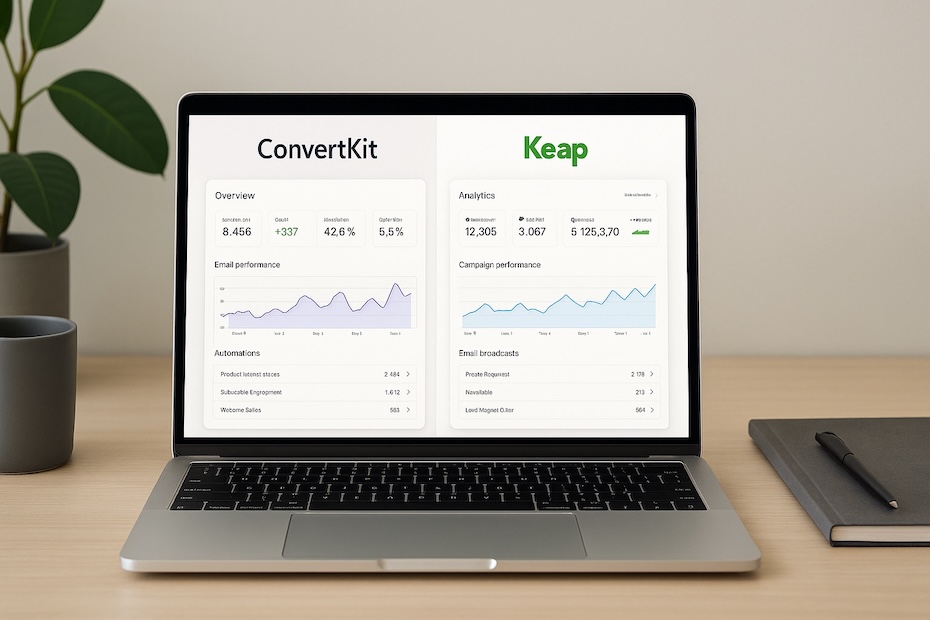
  • ConvertKit or Keap for Nurturing Your Audience with Ease and Style

    ConvertKit or Keap for Nurturing Your Audience with Ease and Style

    You accelerate audience growth by selecting a contact-nurturing tool that fits your communication rhythm, your automation goals, and the stage of your business. ConvertKit and Keap give you two distinct paths: one centered on creator-friendly email strength, and the other on operational power with CRM depth.

    You gain a clear advantage when you understand how each platform shapes the way your audience hears from you, interacts with you, and transitions into loyal buyers. You move faster when your tools match your message, your workflow, and the systems you lean on to scale. This guide walks you through the real questions entrepreneurs ask, supported by current comparisons, user behaviors, and practical decision points.

    What is ConvertKit and why do creators rely on it?

    ConvertKit gives you a clean, creator-focused system built to simplify audience nurturing so you can send emails that feel personal and consistent. You work with a tool optimized for writers, coaches, educators, and solo entrepreneurs who want email delivery accuracy and message clarity without operational complexity.

    Many early-stage creators choose ConvertKit because it keeps your workflow minimal. You manage broadcasts, sequences, tagging, link triggers, and subscriber paths without technical friction. You also gain a visual automation builder that stays readable, even once your campaigns expand. This gives you space to grow your audience with confidence while staying organized. The platform’s landing pages and embedded forms help you collect leads without depending on external plugins or custom development.

    As your content output increases, you rely on ConvertKit’s segmentation ability to send targeted messages without overwhelming your subscribers. You stay aligned with your audience’s interests using tags based on link clicks or behavior signals, allowing you to deliver nurturing emails that feel intentional rather than automated.

    What is Keap and how does its automation engine support business growth?

    Keap gives you a CRM-driven automation platform designed for entrepreneurs who want more than email—who want sales pipelines, scheduling, invoices, and workflows in one system. You gain access to a tool built for growing teams and advanced operations, where audience nurturing ties directly to revenue tracking and customer movement.

    You work with Keap’s automation engine to trigger actions based on conditions, tasks, payments, or form submissions. This lets you build multi-step customer journeys that combine email, SMS, internal reminders, and sales activities. You keep your operations organized because your CRM, pipeline, and email system are unified rather than fragmented across multiple tools.

    For entrepreneurs looking to scale operations, Keap removes time-consuming manual steps. You manage booking, reminders, and follow-ups automatically. You also gain detailed contact records that support deeper personalization and help you understand the timing of each communication. This lets you nurture your audience with more precision.

    How do ConvertKit and Keap differ in audience segmentation and personalization?

    ConvertKit centers your segmentation around tags and subscriber behaviors, giving you a reachable way to separate audiences based on interests or engagement. You manage personalization through simple rule-based triggers, allowing you to send messages that match where a subscriber is in their journey.

    Keap extends personalization through CRM data, giving you more detailed insights into your contacts’ actions, purchase history, call notes, and activity timelines. You tailor your messaging using conditions built on multiple variables, not just email events. This helps you create targeted automations that reflect a contact’s readiness to buy.

    As your audience expands, you may lean on ConvertKit for ease of use or shift toward Keap when your segmentation demands more layers. In both systems, your communication becomes more effective when each subscriber receives content shaped by their behavior, not generic sequences.

    Which platform gives you stronger automation features?

    ConvertKit gives you the core automation tools you need to nurture your audience without overwhelming you. You build sequences, link triggers, visual paths, and onboarding flows that feel intuitive. You keep your workflow streamlined and accessible even if automation is new to you.

    Keap gives you a heavier automation engine designed for multi-step processes across sales, marketing, and operations. You build workflows that combine actions across communication channels and internal tasks. You also monitor each contact’s path using CRM data, giving you more control over timing and complexity.

    Your choice depends on whether you prioritize simplicity or operational depth. ConvertKit excels when your primary focus is email. Keap excels when your system connects communication with revenue and internal processes.

    How do pricing and scalability compare for creators and entrepreneurs?

    ConvertKit gives you a tiered pricing model that grows with your subscriber count. You start with free tools that help you build lists, publish landing pages, and run basic automations. This keeps your early-stage cost low while still supporting audience growth.

    Keap uses a premium pricing model because it replaces multiple tools—CRM, pipeline management, scheduling, payments, and automation. You invest more upfront, but you also reduce the number of platforms you pay for. This benefits entrepreneurs who need a unified system instead of separate tools.

    Your scaling decision depends on your business structure. If email remains your main growth channel, ConvertKit stays cost-efficient. If your business needs a CRM-driven operational engine, Keap becomes the better fit.

    Which platform gives you stronger analytics to guide your strategy?

    ConvertKit provides clear reports on open rates, clicks, subscriber activity, and sequence performance. You use these metrics to refine your content, adjust segmentation, and measure the strength of your audience engagement. This keeps your strategy grounded in subscriber behavior.

    Keap gives you deeper analytics tied to CRM records. You monitor pipeline movement, revenue, automations, and multi-channel activity. You gain visibility into where your contacts fall off, when they convert, and how your systems perform. This helps you align your nurturing rhythm with your sales cycle.

    Both systems give you actionable insights, but the level of detail shifts based on your operational needs. ConvertKit focuses on creator-centric engagement metrics. Keap focuses on business-wide performance data.

    Which tool should you choose for long-term audience nurturing?

    If your strategy centers on content, newsletters, digital products, and education, ConvertKit fits your long-term pace. You communicate with clarity and maintain a personal connection with your audience as it grows.

    If your strategy requires CRM depth, appointment management, sales tracking, and multi-channel automation, Keap positions you for more complex customer journeys. You maintain tighter control of your communication and sales process as your business scales.

    Both systems help you nurture your audience, but each supports a different growth style. You accelerate results when you match the tool to the structure of your business, not the other way around.

    Quick Comparison: ConvertKit vs. Keap for Audience Nurturing

    • ConvertKit offers cleaner email automation for creators
    • Keap adds CRM, sales tools, and advanced workflows
    • Choose ConvertKit for simplicity
    • Choose Keap for all-in-one business management

    Your Path to Confident Audience Growth

    You move faster when your audience tool supports your communication style, your workflow, and your operational goals. ConvertKit gives you simplicity that keeps you agile. Keap gives you structure that keeps you scalable. You gain momentum when you choose the system that aligns with how you work, not just what the features claim. If you want to stay ahead of your audience’s expectations and elevate your presence with clarity, your next step is selecting the tool that matches your rhythm and committing to using it consistently.

  • 10 Strategies to Improve Focus and Beat Academic Burnout

    10 Strategies to Improve Focus and Beat Academic Burnout

    You improve focus and beat academic burnout by building disciplined habits that stabilize your energy, sharpen your thinking, and reduce unnecessary mental load. You strengthen your productivity by treating your academic journey like a long-term performance cycle, not a sprint.

    You’re about to walk through practical, evidence-supported strategies that help you protect your attention and maintain consistency through demanding study schedules. This guide equips you with actionable methods used by high-performing students who sustain long-term output without draining themselves. You’ll see how to reset your workload, structure your tasks, and use mental recovery the way elite performers protect their stamina.

    Strategy 1: Set Clear Performance Targets

    Setting targets gives your mind a defined path, which reduces distraction and helps you move with intention. Students who assign measurable outcomes to each study block often report better retention and lower stress.

    When you build targets, focus on short, achievable benchmarks. Large projects lose their weight when divided into small, clear goals. You avoid overwhelm because your brain receives regular signals of progress. Many high-output students use weekly target reviews to refine their direction. This keeps your academic workload aligned with actual capacity instead of assumptions.

    Consistency is easier when you know exactly what must be accomplished each day. Once you start operating with precise targets, your decision fatigue drops and your energy becomes easier to manage.

    Strategy 2: Reduce Cognitive Load by Streamlining Tasks

    Cognitive overload triggers burnout faster than heavy workloads. Your brain performs best when it handles fewer open loops. Streamlining your system removes unnecessary decisions that drain energy.

    You can start by creating a standardized workflow for your study sessions. Use the same sequence each time — review, practice, summarize. Over time, this structure becomes automatic. Students who rely on routine often maintain stronger focus because their minds are not juggling competing priorities.

    You can also reduce cognitive load by turning repetitive tasks into templates. Pre-formatted notes, preset timers, and organized digital folders make your workload predictable. This stability improves mental endurance.

    Strategy 3: Use Time-Blocking to Protect Attention

    Time-blocking is one of the most effective performance habits for students dealing with burnout. When you block focused time, you shield your attention from multitasking, which research consistently shows weakens retention and slows progress.

    A typical block ranges from 25 to 50 minutes. Your brain engages deeply when it knows a break is coming. These short cycles prevent exhaustion while still allowing meaningful progress. Many students add theme-based blocks as well — “problem sets,” “essay draft,” “review,” and so on. This eliminates the need to decide what to do next.

    Once you master time-blocking, your workload becomes structured, predictable, and far easier to sustain during stressful periods.

    Strategy 4: Strengthen Focus by Eliminating Digital Interference

    Your digital environment influences your academic performance more than most students realize. Constant notifications fragment your attention, and even minor distractions reduce learning efficiency.

    You can take control by customizing your device environment for study hours. Silence notifications, remove unused apps, and keep only the tools you actively need on your home screen. Many students create a “study mode” setup on their laptop and phone to limit temptations.

    You’ll notice the difference almost immediately. When your devices stop pulling at your attention, you can dive into academic tasks with more clarity and less exhaustion.

    Strategy 5: Build Recovery Rituals to Prevent Mental Fatigue

    Recovery is a performance tool, not a luxury. Academic burnout often begins when you consistently work beyond your mental capacity without structured rest.

    Building recovery rituals helps stabilize your cognitive energy. This might include stretching, walking, hydration breaks, or short breathing intervals between study blocks. These moments reset your mind and allow you to maintain longer periods of high-quality focus.

    Students who prioritize recovery often outperform those who grind without limits. Your mind needs intervals to recharge the same way athletes need rest between training sessions.

    Strategy 6: Improve Retention Through Active Learning

    Passive reading drains time and mental energy. Active learning strengthens focus and prevents burnout by engaging more of your brain during study sessions.

    You can enhance retention by teaching concepts out loud, creating quick flash summaries, or testing yourself with spaced repetition tools. These formats force your brain to recall information, and that friction signals deeper learning.

    Over time, active learning reduces the hours you need to study because your output improves. This leads to less stress, more confidence, and a healthier academic rhythm.

    Strategy 7: Restructure Your Academic Schedule to Match Your Energy Curve

    Your productivity peaks follow natural patterns. You protect yourself from burnout by studying when your energy is strongest.

    Start by observing when your focus naturally rises during the day. Many students work best in the morning, while others hit peak concentration in the afternoon or evening. Build your study plan around those windows instead of forcing artificial timing. Aligning tasks to energy makes complex work far more manageable.

    Once your schedule matches your rhythm, you reduce strain and increase your overall output without needing extra hours.

    Strategy 8: Use Environmental Design to Support Deep Work

    Your environment determines your consistency. High performers design their space intentionally because clutter and noise drain mental energy.

    You can elevate your environment by keeping your desk clean, limiting visual distractions, and maintaining consistent lighting. A calm workspace helps your brain switch into learning mode quickly. Some students use scent, background audio, or temperature adjustments to reinforce the shift into focus.

    Environmental cues matter. When you optimize your space, your mind follows the signal to concentrate.

    Strategy 9: Strengthen Mental Endurance Through Small Daily Wins

    Burnout often begins when progress feels stagnant. You reverse that direction by stacking small wins that remind your brain you’re advancing.

    Break large goals into quick wins — one solved problem, one paragraph drafted, one concept mastered. Small wins build momentum, and momentum sustains motivation. Many students track daily wins in a visible place to reinforce progress even during heavy weeks.

    This system builds confidence and mental stamina, which protects you from the emotional fatigue often linked to burnout.

    Strategy 10: Reconnect With Your Purpose to Restore Motivation

    Burnout makes your academic goals feel distant. Connecting your work to a clear purpose anchors your effort and reduces emotional strain.

    You can reconnect with purpose by reviewing why your studies matter to your long-term vision. Students who revisit their goals regularly maintain stronger resilience. This renewed sense of direction supports your endurance through complex assignments and demanding schedules.

    Purpose stabilizes your mindset. When you remember your “why,” your productivity becomes easier and more intentional.

    Quick Ways to Beat Academic Burnout

    • Set small goals
    • Use time-blocks
    • Limit digital distractions
    • Practice active learning
    • Add recovery breaks

    Refuel Your Performance and Protect Your Momentum

    You improve your academic performance when you support your mind with structure, recovery, and intentional habits. Consistent focus comes from controlling your environment, protecting your energy, and building routines that reinforce progress. As you apply these strategies, you create a study rhythm that feels sustainable instead of draining. Your mind stays sharper, your stress stays lower, and your academic results strengthen over time.

  • Why a Global Network is Your Most Valuable Asset: 10 Ways to Build International Connections in College

    Why a Global Network is Your Most Valuable Asset: 10 Ways to Build International Connections in College

    A global network is your most valuable asset because it provides access to diverse knowledge, a multitude of cross-cultural insights, and opens doors to career opportunities that most students never realize even exist. In today’s world, building international connections during your college years will give you a significant head start in your professional life. This article, drawing on personal experience from decades in global industry and higher education, explains why building these relationships is indispensable and gives you ten precise strategies to expand your circle authentically—all while making this skill a force multiplier for your future.

    Why is a Global Network Important for College Students?

    A global network gives you a competitive edge by exposing you to business practices, academic perspectives, and cultural traditions you’d never encounter otherwise. The breadth of this network marks you as a candidate ready to thrive internationally. Your visibility rises within recruitment pools and your options expand—often through a single connection that reconnects years after you first met.

    Consider how the world operates: companies build international teams and demand graduates who can collaborate across time zones, cultures, and languages. When you network beyond your own background, you signal your agility, curiosity, and maturity to recruiters. You learn to communicate effectively, adapt your style, and discover new ways of working—traits now among the most sought-after globally.

    The impact isn’t just on your future employment. Many lasting professional and personal relationships grow from international connections formed in your university years. You may discover job leads, internships, business partnerships, or peer mentors who open up entire new fields—and you’ll be positioned to do the same for others.

    1. Actively Participate in International Student Organizations

    Start with your campus’s international clubs and associations—even if you aren’t an international student yourself. These groups attract people from all backgrounds, and joining isn’t just about putting another entry on your CV.

    Go further than attending meetings: volunteer to help plan events, serve as an officer, or take on a project role in welcoming programs for new students. Organizing cultural nights, discussion panels, or collaborating on community outreach will give you the opportunity to build close working relationships, practice leadership, and become a familiar face throughout your campus.

    Take every chance to engage with students from backgrounds different than your own. Listen to their stories about home, their adjustment experience, or their ambitions. When you move beyond superficial conversation and show genuine interest, you not only earn trust but lay the groundwork for sustained friendships and cross-border connections that often outlast graduation.

    2. Engage in Cross-Cultural Classroom Projects

    Whenever you’re put in a group for class, look beyond your comfort zone. Volunteers for group work often default to friends or students from a similar background, missing real opportunity. Instead, request (or volunteer for) mixed teams whenever there’s a chance.

    You’ll see right away that classmates from other countries might approach questions, research, and presentations differently. For example, you might collaborate with a teammate from Turkey who puts strong emphasis on personal relationship-building before dividing project work, contrasted with someone from Germany who jumps quickly to logistics and process. Through first-hand interaction, you’ll adjust your expectations, refine your communication skills, and develop flexibility—key assets for any role in a global industry.

    After the project is finished, don’t just move on. Make a habit of connecting on LinkedIn, writing a quick follow-up (complimenting their contribution or asking about their next project), and, if possible, nurturing the connection through periodic informal chats or idea exchanges. With time, these classmates can become international colleagues or references whose perspectives remain valuable well after you leave school.

    3. Leverage University Alumni Networks

    The alumni network affiliated with your campus is often international—even at universities that aren’t huge. Take advantage of online alumni directories, LinkedIn university filters, and career center resources that enable you to search for graduates in your field who live all over the world.

    Don’t hesitate to introduce yourself to alumni working abroad, noting your shared university connection. Ask for 15 minutes to learn about their current role or advice for students seeking to go international. (This brief, focused ask is far more effective than an open-ended “can I pick your brain?” message.)

    Where possible, attend alumni networking events on campus—particularly those with a global focus. If a guest speaker has experience in a country or industry you’re interested in, look for opportunities to follow up with the event organizer or the speaker directly after the event to continue the conversation.

    Meaningful alumni contacts give you a ready-made support system. Many will introduce you to local business cultures, new markets, or other professionals. They can also become references when you apply for internships, jobs, or graduate programs globally.

    4. Participate in Study Abroad or Exchange Programs

    Immersion is one of the fastest ways to build meaningful international relationships. Study abroad, summer courses, or paid internships in another country will put you in daily contact with local students, faculty, and fellow internationals navigating the same new environment.

    Do more than the minimum required. Choose to live in mixed housing or with a host family if possible. Prioritize classes, clubs, or volunteer opportunities that help you meet local students. Dive into events like art exhibits, public lectures, or service projects, even if they’re outside your academic focus.

    Learning the basics of the local language—even if “hello,” “thank you,” and “where is the metro?” is all you master—shows respect and interest. It’s a signal to locals that you’ve made an effort, which builds rapport quickly and often opens doors to deeper friendships and professional contacts.

    If you’re curious which habits lead to the most fruitful study abroad experience for building a global network, consider the following:

    • Choose mixed or homestay housing instead of isolating with your own culture group.
    • Enroll in courses unique to your host country, such as regional history, politics, or local industries.
    • Volunteer with a local organization, expanding your connection beyond campus.
    • Travel intentionally–visit communities beyond tourist areas to deepen cultural appreciation.
    • Stay in touch once you return home, sending regular updates, sharing articles of mutual interest, or celebrating your friends’ milestones.

    5. Attend International Conferences and Webinars

    Industry and academic conferences—whether conducted on campus, in a nearby city, or virtually—serve as powerful hubs for cross-border networking. Many major organizations offer free or heavily discounted access for students.

    Before a conference, scan the agenda for speakers and panelists in your field. Research them, then prepare questions or comments to bring up during panels or networking breaks. At virtual events, participate in chat forums, join breakout sessions, and connect with interesting attendees or presenters on LinkedIn with a brief personalized note.

    Don’t just focus on the formal agenda. The best connections often arise in the margins—in the shuttle going to the event, at coffee breaks, or over group meals. Keep a stock of business cards or, at virtual events, a professional email signature with your school, degree, and area of interest.

    Maintain the relationship after the event: send a follow-up message, thank speakers for insights, share a thought from a session, or ask a brief question relating to their expertise. Over time, a casual post-conference chat can develop into opportunity for collaboration or a mentorship.

    6. Utilize Social Media and Professional Platforms Strategically

    Today, LinkedIn, Twitter, and similar sites are more than resume repositories—they’re essential venues for real, lasting professional connections. Start by ensuring your public profiles are accurate and showcase international interests and experiences.

    Follow international thought leaders and companies relevant to your field. Engage with their posts by asking insightful questions or adding value in the comments. Share articles and add your perspective—especially when you can bring in observations from your home culture or international experiences. Become known as someone who contributes thoughtfully across cultures.

    When sending connection requests (especially to people abroad), always include a short, specific note explaining why you’re reaching out. If you attended a webinar, mention what you found interesting or ask a follow-up question. Avoid generic outreach—people are far more likely to engage if you show attention to shared interests or mutual connections.

    Professional platforms are also fertile ground for learning about international internship postings, research opportunities, and scholarship programs not widely advertised in your local market. By staying active and engaged, you increase your visibility and the likelihood that opportunities find you.

    7. Get an On-Campus Job with an International Focus

    Many university offices, including international admissions, study abroad, and international student services, have assistant or student worker roles. These positions place you at the crossroads of campus and global communities, giving daily exposure to fellow internationals and staff experienced in international education.

    Working in one of these offices often entails welcoming new students, helping with orientation, assisting at visa workshops, or supporting cultural events. Through these duties, you’ll practice clear communication, problem-solving, and cross-cultural understanding—competencies valued in both nonprofit and corporate spheres.

    Relationships formed in these roles can become part of your long-term network—not just students you help, but also staff supervisors and visiting speakers who move to roles in global organizations. The skills and contacts from these roles can serve as a bridge to internships, grad programs, or jobs in international settings after graduation.

    8. Learn a New Language

    Acquiring even a working knowledge of another language multiplies your connection opportunities exponentially. Most universities offer language courses for credit, and many campus clubs run informal conversation groups.

    Choose a language spoken in regions where your industry or academic field is growing. In addition to classes, seek out cultural events—film nights, conversation tables, or guest lectures—that expose you to native speakers and practical usage. Look for language exchange partners, where you can practice your new skills in return for helping someone with your own language.

    Language learning is not a minor skill. It demonstrates resilience, adaptability, and cross-cultural curiosity. Even modest proficiency signals effort that most people respect and appreciate. It will also help you follow local media, access new perspectives, and deepen relationships that would otherwise be limited to English alone.

    9. Engage with Professors with International Experience

    Identify faculty who have published internationally, have worked in roles abroad, or are engaged in research with global partners. Take their classes, participate in seminars, and introduce yourself during office hours with questions about their international work. Expressing a genuine interest in their background can lead to deeper academic advice and potential introductions to their professional circles.

    If you establish a solid working relationship, professors may recommend you for research positions abroad, provide information about grant opportunities, or connect you with colleagues at other institutions. They often act as references in international fellowship or grad school applications, and can help guide your strategy for growing your international presence within your field.

    Show initiative by proposing small research projects, asking about common challenges their international colleagues face, or suggesting topics for essays or presentations informed by international research. Faculty appreciate students who are proactive and curious about professional communities beyond their home country.

    10. Volunteer for Global or Local Community Causes

    Volunteering bridges campus and the wider world, giving you a stake in causes that matter to people worldwide. Many universities have chapters of international organizations such as the Red Cross, Rotary, or Engineers Without Borders. You may also find opportunities with local groups serving recent immigrants, refugees, or language learners.

    Volunteer for projects that involve cross-cultural collaboration—whether that’s supporting translation for a newcomer, organizing relief events, or delivering presentations to schools. These experiences put you in contact with peers and professionals from a wide range of backgrounds—all of whom are invested in their communities and connected to global networks.

    The nature of volunteer work builds strong, lasting relationships. Working toward a common cause strengthens trust and camaraderie—bonds that often last far longer than casual networking. Many professionals trace their most meaningful international connections to early volunteer experiences that demonstrated shared values in action.

    How to Build International Connections

    • Join student organizations focused on international interests
    • Participate in a study abroad or exchange program
    • Use alumni networks to identify global mentors
    • Attend international or industry conferences and webinars
    • Build relationships through classroom group projects and volunteering

    Your Network is Your Net Worth

    As you move through college, remember that degrees and grades matter—but in a globally connected world, your relationships may matter just as much. Building a global network calls for action, empathy, and sustained curiosity. If you treat every course, event, and friendship as a potential bridge to another culture or market, you multiply your chance at unexpected opportunities. Commit to the ten strategies outlined here and you’ll graduate with a vibrant, international support system—one that will back your growth in academics, your professional ambitions, and your personal life for decades to come.

  • The Cross-Cultural Edge: How Being an International Student Prepares You for Global Leadership

    The Cross-Cultural Edge: How Being an International Student Prepares You for Global Leadership

    Yes, being an international student gives you a cross-cultural edge that directly prepares you for global leadership roles. The wide exposure you gain—across languages, academic systems, and interpersonal relationships—forces you to build resilience, adaptability, and the ability to work with people from different backgrounds. When you live and study abroad, you develop strategic skills that global companies value highly in leaders charged with navigating today’s interconnected business world. In this article, I’ll show you how the journey equips you—step by step—to become an international leader ready for opportunity anywhere in the world, and how you can communicate this edge for professional impact.

    How Does Studying Abroad Develop Adaptability?

    Your first steps as an international student are filled with newness: unfamiliar cities, campus layouts, public transport, and everyday customs. You immediately confront practical challenges that test your adaptability—from figuring out transport in a new city to managing unfamiliar banking or rental systems. Every meal, class, and interaction asks you to adjust, learn, and act independently. This is where your ability to adapt gets exercised daily.

    Adapting means more than just coping with homesickness or navigating local shops. Thriving requires rapid learning. You have to understand new teaching styles—maybe moving from rote memorization to class debates or case studies—and accept new forms of assessment. Conducting group work with classmates from diverse cultures compels you to change how you share ideas, seek consensus, and organize tasks.

    This flexible approach directly matches what’s needed in global business. The market can shift unexpectedly; teams can be restructured overnight. Leaders must pivot strategies and communication styles under pressure. If you’ve managed to cross-language barriers, handle cross-time-zone communications with family back home, and push through cultural differences in your study group, you’ve practiced precisely the mindset and skills that are necessary in volatile international business environments.

    True adaptability as an international student also comes from emotional shifts. You may go through waves of culture shock—initial excitement, frustration, gradual acceptance, and, finally, truly feeling at home. Research shows those who successfully manage these phases display higher cognitive flexibility and self-awareness, both of which are highly predictive of leadership effectiveness. By the end of your degree, resilience to ambiguity and the willingness to learn quickly are qualities you embody, not just theorize about.

    What Communication Skills Do International Students Gain?

    While language fluency is often the first hurdle, communication skills for international students go much deeper. Every aspect of daily life—registering for classes, finding housing, managing legal paperwork, shopping, and building friendships—requires real-time communication adaptation. You quickly realize that even when you share a language, body language, tone, and implied meaning can vary greatly by culture.

    Over the course of your program, you move from translating your thoughts word-for-word to thinking and expressing yourself in the new cultural style. This might mean learning to be more direct in some countries, or more circumspect in others. You routinely interpret non-verbal cues, read between the lines, and clarify intentions to avoid misunderstandings. Each assignment and presentation strengthens your ability to explain ideas so others from different backgrounds can follow and respond.

    Collaborating in multicultural classrooms gives you experience bridging differences and negotiating understanding. You practice shifting vocabulary, sentence structure, and tone depending on your audience—skills that are essential when leading international teams or hosting cross-border negotiations. It’s not uncommon for an international student to serve as a cultural mediator within a project group, easing tensions or rephrasing others’ suggestions to facilitate understanding. By graduation, you’re not just bilingual or trilingual—you’re bicultural or multicultural in your approach to conversations.

    Empathy is another result of your international communication journey. You recognize the challenges others face when they’re not communicating in their native tongue or when they’re adjusting to shared expectations. This ability to step into someone else’s shoes is a direct advantage for global leaders, who must inspire buy-in from stakeholders with radically different expectations and negotiate agreements between parties with clashing communication styles. In a world where digital teams span continents, your communication toolkit sets you apart.

    How Does Cultural Immersion Build a Global Mindset?

    Cultural immersion is an all-in experience, one that goes well beyond textbooks or classroom lessons. When you live and study in a new country, you are constantly exposed to different behaviors, priorities, and worldviews. Your morning commute, your classroom etiquette, and even lunchroom banter all offer lessons about what other cultures value and how they see the world.

    Gradually, you start to notice unspoken codes—perhaps punctuality is sacred in one country but casual in another; maybe teamwork looks like consensus-building in one setting and direct leadership in another. By observing, you learn to check your own cultural assumptions. You become more open to new methods and more adept at distinguishing between universal business principles and local best practices.

    Understanding the local context—history, politics, customs, and even holiday schedules—gives you practical skills for global business. If you attend university in Germany or Japan, you’ll notice deep respect for process and hierarchy; study in the US or Australia, and you’ll encounter more informality and encouragement for individual initiative. Recognizing and respecting these differences is critical. In later professional life, this awareness lets you avoid faux pas, build rapport, and customize your leadership approach for each market.

    You will also likely observe major world trends first-hand. A classmate from China might shed light on digital innovation there, or a Brazilian peer might explain the nuances of working in an export economy. Learning directly from others’ perspectives broadens your professional awareness and your ability to see opportunities beyond your home market.

    While cultural immersion begins with confusion or discomfort, it matures into a nuanced understanding of what drives decisions, motivates teams, and fosters loyalty around the globe. If you’ve succeeded academically and socially in a country not your own, you’re primed for roles requiring strategic thinking across borders.

    How Do International Students Become More Resilient?

    Resilience may be the single greatest quality that international students develop—one shaped by necessity and opportunity. The challenges you encounter are both expected and unpredictable: language struggles, bureaucratic headaches, financial stresses, and sudden homesickness. Not to mention times when group assignments fail, you misunderstand a professor’s expectations, or you miss important events at home.

    You learn quickly that resilience is about bouncing back, not just enduring. At first, setbacks may shake your confidence, but every time you overcome a difficulty—whether navigating visa issues on a tight deadline, resolving a housing mix-up, or pushing through a disappointing exam—you build self-reliance. The need to solve your own problems, without your familiar support system, encourages you to seek out resources, build new friendships, and develop coping mechanisms.

    As time passes, you internalize the lesson that adversity is temporary if met with action. This mindset, when carried into the workplace, sets you apart from peers who are rattled by uncertainty or setbacks. Leaders often rise during crises or moments of failure, so your habit of seeking solutions and learning from mistakes positions you to respond with composure and creativity during professional turbulence.

    Your ability to maintain motivation, rebuild social networks, and handle unfamiliar work or learning styles is unparalleled among your peers who remained local. Surveys of international graduates frequently find that this segment of the alumni population is more likely to assume leadership posts, manage multi-site teams, or relocate for new roles—a direct result of the resilience forged abroad.

    How Does Studying Abroad Strengthen Problem-Solving and Critical Thinking?

    Every day abroad presents complex scenarios, both big and small. Whether it’s figuring out how to convert transcripts for local recognition, managing finances with an uncertain exchange rate, or mediating conflict in group projects, you face problems with no easy or familiar solution. These experiences foster a type of analytical thinking that’s creative and situationally aware.

    In your coursework, you encounter classmates who come from educational systems that prioritize different skills. Some might be experts at group collaboration, while others bring sharp individual analysis. Exposure to these different learning styles sharpens your ability to break problems into parts, assess multiple solutions, and synthesize ideas for well-rounded outcomes. Studies show that diverse teams routinely outperform homogeneous ones on creative tasks. As the person who’s experienced both outsider and insider status, you know how to bring those teams together and push thinking further.

    Throughout your studies, you move past the temptation to rely on what’s worked at home. Instead, you actively seek out multiple perspectives. If your group is discussing a global marketing challenge, you learn to weigh the regulatory environment in Europe or the cultural trends in the Middle East. This kind of multi-dimensional problem solving is essential to senior leadership, where single-issue solutions rarely succeed.

    International students also gain practice in decision making under uncertainty, something directly applicable to corporate strategy. You must weigh trade-offs with incomplete information, consult peers from various backgrounds, and respond quickly to feedback that may clash with prior expectations. By graduation, your brain is comfortable with ambiguity—a rare and sought-after skill in an unpredictable global economy.

    How Does an International Student Build a Global Network?

    From day one, your university experience is shaped by diversity. Your roommates may come from Asia, Africa, Europe, or the Americas. Your professors may have worked across sectors and continents. Every class and club meeting is a chance to build connections with people whose networks stretch across the planet.

    You learn early the value of “weak ties”—the acquaintances who may later serve as references, business partners, or thought leaders in your field. Proactive networking becomes part of your self-development: you show up at mixers, join campus societies, mentor junior students, and participate in alumni events. In the virtual age, you complement in-person events with engagement via LinkedIn, webinars, and cross-university competitions.

    Faculty contacts are particularly valuable. Many professors are conduits to industry partnerships, internships, or academic research. By asking insightful questions, serving as a teaching assistant, or excelling in their courses, you position yourself for recommendations that can carry weight in the job market.

    Your global network is multi-layered and self-renewing. Years after returning home or moving on to a new country, you can reconnect with former classmates who now hold leadership roles on other continents, or tap into university alumni chapters for advice and collaboration. Professional networking is not just an afterthought for you—it’s an embedded part of how you succeed.

    How International Students Master Articulating the Cross-Cultural Edge

    Knowing how to discuss your international student experience with recruiters and hiring managers can make all the difference. You cannot expect the value to “speak for itself.” Instead, you need to translate these experiences into competencies that employers prize in global leaders: adaptability, communication, resilience, creative problem-solving, and a broad professional network.

    On your resume, be specific. Don’t simply write “Studied in Spain,” or “Graduated from a UK university.” Instead, include concrete achievements: “Negotiated a group project among teammates from five countries resulting in top honors for a cross-cultural consulting campaign,” or “Presented a thesis on global branding to a panel of professors from three continents.”

    During interviews, use narrative to illustrate how you adapted or led in an unfamiliar setting. When discussing adaptability, you might describe how you handled an administrative setback that could have delayed your graduation, or how you navigated team conflict during cultural misunderstandings. When asked about your strengths in communication, explain how you built bridges between classmates whose first languages and working styles differed from your own.

    Employers increasingly use behavioral interviews to probe for leadership potential. By preparing stories, using the STAR approach (Situation, Task, Action, Result), and demonstrating how your international experience shaped your growth, you help decision makers understand the depth and relevance of your cross-cultural skills. This clarity is vital for landing roles in multinational corporations and for fast-tracking your ascent into global management.

    Gaining an Edge Through Academic and Professional Development

    Every international student experiences an adjustment curve when entering a new academic system. University teaching styles, assessment methods, and research expectations vary widely around the world. In the UK, you might find coursework weighted heavily toward independent dissertation work and frequent debate; in the US, you could encounter ongoing assessment, classroom participation, and open office hours. Navigating these systems builds academic agility.

    You are also likely to use university-sponsored career services, participate in mock interviews, and engage with professional development programs focused on job searching in a foreign culture. These experiences provide you with practical job-market navigation tools and help you learn how to “sell yourself” effectively when moving between regions.

    Industry internships, case competitions, and on-campus networking events open doors not just for work experience but also early job offers. Companies often prefer to hire those with international experience, who are already equipped to adjust to varying management styles and business expectations. You come out of your program with a proven track record in real-world, multicultural settings and are better prepared to transition seamlessly into multinational workplaces.

    Let’s step back and highlight some practical benefits that emerge after roughly 500 words of professional and academic immersion abroad, before moving to soft skill development:

    • You access high-value internships aligned with global job markets because recruiters prioritize students who have proven they can adapt.
    • You develop research skills through exposure to different methodologies, particularly important if you plan to work as an analyst, consultant, or academic.
    • You have firsthand practice in stakeholder management, as you navigate expectations from home, faculty, sponsors, and industry partners.
    • You leverage campus diversity through participation in student leadership, clubs, and international organizations—preparing you to lead global teams.
    • You learn to advocate for yourself—negotiating financial aid, employment authorizations, or research opportunities in a different system.

    How Do International Students Cultivate a Global Mindset for Leadership?

    Beyond adjusting to culture and study methods, international students intentionally develop a leadership mindset—the ability to view challenges and opportunities across borders. This mindset is marked by curiosity, cultural humility, and strategic thinking. Instead of seeing local and global concerns as separate, you perceive them as interconnected.

    Exposure to peers from different political systems, religions, and professional backgrounds challenges superficial assumptions. You learn firsthand about global supply chains, the movement of talent, and the nuances of managing cross-border projects. Your global mindset is not theoretical but practical: you understand how policy changes in Asia might affect markets everywhere, or how a local trend in Africa could lead to worldwide innovation.

    Internships, volunteering, and participation in research broaden your exposure. If you join a global case competition, for instance, you’ll find yourself working on problems pulled from real industry settings—be it sustainability, digital transformation, or economic inclusion. Your ability to connect the dots between your coursework, student activities, and world events enhances your leadership profile.

    Global leadership also comes with an ethical dimension. Living abroad, you see the impact of personal choices—your own and others’. You reflect on what it means to be a responsible leader, whether in environmental stewardship, cultural respect, or inclusiveness within teams. Those lessons carry into every future organization you join.

    How Can International Students Leverage Their Edge in Today’s Global Labor Market?

    As international graduates, you compete not just for local jobs but for roles on every continent. Labor market research indicates that employers put a premium on “global readiness”—willingness to relocate, proficiency in multiple languages, and cross-border work experience. Your resume stands out among domestic peers precisely because of your international exposure.

    Employers look for global agility—the ability to think, act, and perform in fast-moving, multicultural environments. Companies that want to expand abroad or manage offshore teams prioritize leaders who have demonstrated success outside their home culture. Your story gives assurance that you’ll thrive during a posting in Singapore, lead deal negotiations across language barriers, or manage a team split between Frankfurt, Sao Paulo, and Mumbai.

    Online professional platforms make your international experience easily visible. Highlighting university projects, language certifications, or training in global leadership increases your attractiveness. Alumni networks help you keep track of opportunities, and your familiarity with working across time zones—sometimes hosting video calls at midnight or flying to conferences during exams—signals both flexibility and commitment.

    It’s important to realize that international education is a lifelong differentiator. Even years after your studies, you’ll draw on the habits, relationships, and ways of thinking forged during your time abroad. You’re not just job-ready—you’re leadership-ready in a rapidly globalizing business world.

    Key Ways International Study Prepares You for Global Leadership

    • Builds adaptability for rapid change
    • Sharpens cross-cultural communication skills
    • Strengthens resilience through challenges
    • Expands global mindset and perspective
    • Fosters worldwide professional networks Global Leadership: An Ongoing Journey Powered by the Cross-Cultural Edge

    Global Leadership: An Ongoing Journey Powered by the Cross-Cultural Edge

    Choosing to study abroad was more than a milestone; it was a launchpad for a career characterized by international opportunity, resourceful teamwork, and strategic vision. The skills you built—adapting in the face of change, communicating across cultures, managing challenge with courage, and building bridges that connect people and ideas—set you apart as a future global leader.

    What you carry forward is not just a set of credentials or memories but a practical, portable advantage in every new setting. As you progress in your career, continue to capitalize on this edge—apply your learning, deepen your networks, and seek out roles that leverage your international strengths. The cross-cultural edge isn’t a one-time benefit; it’s a sustainable source of leadership value for years to come.

  • The Financial Aid Maze: A Practical Guide for International Students on Funding a US Education

    The Financial Aid Maze: A Practical Guide for International Students on Funding a US Education

    Securing adequate funding for a US education as an international student is rarely straightforward. Most federal resources and government-supported options that American students take for granted are out of reach, which makes grants, scholarships, sponsorships, and private student loans the cornerstones of your financial planning. Facing high tuition, living costs, and unexpected fees, you must research, strategize, and act early to maximize your chances for support. This comprehensive guide walks you through the intricate steps, decisions, and realities you’ll face when building your financial foundation as an international student in the United States. Learn where and how to search, how to assess and compare your options, how to put together a practical budget, and how to take action with clarity and confidence.

    What Financial Aid Are International Students Eligible For?

    International students are generally not eligible for US federal financial aid. This means you will not qualify for Pell Grants, Direct Subsidized or Unsubsidized Loans, and most federal work-study opportunities. Instead, your main sources of financial aid will fall into several categories: university-funded scholarships and grants (primarily merit- or need-based), privately funded scholarships through companies, foundations, national or regional associations, education loans geared specifically for international students, and possible governmental support from your home country.

    Let’s break down these categories with a clear understanding of how each operates:

    • University aid: US universities are, by far, the largest source of scholarships and grants. Merit-based scholarships generally take your grades, standardized test scores, language proficiency, and sometimes extracurricular or leadership activities into account. Some schools also offer need-based support but competition for this aid is fierce and primarily concentrated among a handful of highly selective, well-endowed private universities. You may encounter “full-ride” scholarships at elite schools, but partial awards are far more common.
    • Private organizations: These include global corporations, rotary clubs, community foundations, diaspora or cultural organizations, and non-profits. Programs often target students entering certain disciplines (STEM, business, public service), students from particular regions, or those who demonstrate certain passions or backgrounds. Each has its own eligibility checklist.
    • Home government or organizations: Several countries offer scholarships (sometimes in exchange for a future service commitment) or supplement funding for study abroad. In some cases, large commercial enterprises or government councils from your country of citizenship may issue education loans, matching grants, or even exchange sponsorships.
    • International student loans: Notable differences exist compared to federal loans. US private lenders, including internationally-focused providers (like MPOWER and Prodigy), generally require either a creditworthy US-based co-signer or have stricter eligibility requirements with higher rates. Repayment terms may be less flexible than those familiar to US students, and some loans accrue interest during school.
    • Personal and family funding: According to data from the Institute of International Education’s Open Doors Report, nearly two-thirds of all international students rely primarily on family funds to cover tuition and daily living expenses. A small percentage also work part-time in allowed on-campus jobs, but this cannot be your main strategy for meeting the large majority of your financial needs.

    Throughout your financial planning process, keep in mind that your ability to demonstrate clear, liquid funds is critical for both admission and the US student visa application. Always secure detailed documentation.

    Step 1: Researching University-Specific Aid

    The first—and strongest—pillar of your funding plan is university-based aid. The differences between universities in the US are dramatic: some offer generous packages to international students, others offer very little, and most fall somewhere in between. You must start your research as soon as you decide to apply, and before you shortlist universities.

    Begin by looking at each university’s international admissions, financial aid, and scholarship pages. Seek out two types of opportunities: automatic merit-based scholarships (sometimes called “entrance awards,” which you’re considered for simply by applying) and competitive/internal scholarships (requiring essays, portfolios, interviews, or separate applications).

    Many US universities expect full financial responsibility from international students. However, a significant number, especially private institutions and a few well-funded public universities, offer substantial aid to a small subset of international applicants.

    Universities typically provide statistics on the average award size, the proportion of students awarded aid, and what percentage of demonstrated need they aim to meet. This data is sometimes tucked away in “Common Data Set” disclosures or annual reports—seek these out so you have the most accurate expectations. Remember: the sticker price is often not what you’ll pay if you win an award.

    Key points for researching university aid:

    • Check if international students are eligible for all, some, or no institutional aid.
    • Note whether award application deadlines coincide with (or precede) the admissions deadline.
    • Determine which scholarships are renewable and what GPA, credit load, or conditions are required for renewal.
    • Find out if a separate financial aid application (CSS Profile, ISFAA, or other) is mandatory, and factor in the document/certification requirements.
    • Identify “need-aware” schools, which factor your aid request into their admissions decision, versus “need-blind” ones, where your financial need doesn’t affect your offer. Only a handful of elite schools are truly need-blind for international students.

    Consider this data excerpted from the 2024 Open Doors Report:

    • Average Percentage of International Undergraduates Receiving Aid: 19%
    • Average Award to International Undergraduates (all institutions): $15,187/year
    • Elite Private Universities (Ivy League, Stanford, MIT, etc.): Awards may cover up to 100% of demonstrated need (rare, highly competitive)

    Graph idea (not depicted): Bar graph comparing average institutional aid for international students at public vs. private universities (demonstrates the strong skew in favor of privates).

    How Do I Apply for Institutional Aid?

    Applying for institutional aid as an international student typically involves at least two parts: submitting the admissions application and providing detailed financial documentation. US federal FAFSA forms are not for you. Most universities use the CSS Profile (College Board) or their own International Student Financial Aid Application (ISFAA).

    The CSS Profile is accepted at many private (and some public) universities. It captures a thorough snapshot of your family’s income, assets, liabilities, and sometimes non-cash benefits. All figures must be presented in US dollars and supported by translated documentation. Fees apply for submission and for sending to each university, but need-based waivers exist for select students. The ISFAA is a simpler, school-specific form, usually free but still potentially requiring significant supporting paperwork (bank statements, proof of employment, asset lists, tax returns).

    You must be rigorous and consistent: mismatches or missing documents can delay or jeopardize your aid eligibility. Any advantage you claim (such as siblings in college, medical expenses, or parental unemployment) needs to be fully substantiated. Be honest and realistic—the consequences of misrepresenting your finances can include denial of admission, cancellation of aid, or even revocation of your student visa.

    After you submit, universities review your data and match you to institutionally funded need-based or merit-based opportunities. They may also nominate you for special scholarships funded by alumni endowments or corporate donors. The strongest applications are those that demonstrate both academic preparedness and responsible, transparent financial planning.

    Tips for a successful financial aid application:

    • Start your application early and maintain a digital folder for all major documents (scans of tax returns, salary slips, affidavits, bank letters, etc.).
    • Double-check exchange rates and ensure all conversions are accurate.
    • If unusual circumstances have affected your family’s finances (death, divorce, catastrophe), include documentation and a detailed explanation.
    • Follow up with the university financial aid office to confirm receipt and completion of all files.

    Universities may request interviews or clarification if something unusual arises in your application. Keep your lines of communication open and respond promptly to inquiries to avoid missing out.

    Step 2: Finding and Winning External Scholarships

    University scholarships and grants rarely cover everything—so the next step is to build a strategy for identifying, applying for, and securing external scholarships. The landscape is vast and competitive. The process, however, is much like a job search: the rewards grow with persistence, tailored effort, and effective storytelling.

    Begin with the well-known international student scholarship databases. Platforms like IEFA.org, InternationalScholarships.com, ScholarshipPortal.com, and even larger engines like Fastweb and College Board’s BigFuture aggregate awards from private companies, international organizations, diaspora groups, and academic societies. Many are open to undergraduate, graduate, professional, and research-bound students; read eligibility carefully.

    You should also check listings maintained by US embassies, home-country education ministries, and professional organizations. Certain foundations and associations sponsor annual awards for specific cohorts—for instance, the AAUW International Fellowships (for women), the Aga Khan Foundation (for socially-minded students), and corporate awards from entities like Google, Ford Foundation, and World Bank.

    Professional associations in STEM, business, law, and the arts often run their own scholarship contests. These typically require a field-specific essay, project proposal, or record of extracurricular involvement.

    Consider smaller scholarships as well. Many are less competitive, and several small awards can collectively make a noticeable difference year over year.

    How to Stand Out in Scholarship Essays and Applications

    The competition for external scholarships can be intimidating, but well-crafted essays and authentic applications set top contenders apart. Scholarship review committees are often inundated with applications highlighting generic excellence—what stands out is your individual story, connection to the scholarship mission, and potential for impact.

    Your best essays are:

    • Personal: Relate meaningful stories that show why you are passionate about your field and how it connects to your background or career goals.
    • Mission-Aligned: Reference the values or social mission of the issuing organization and explain concretely how your work or study advances these aims.
    • Concrete: Point to measurable projects, leadership moments, or research in which you played a tangible role—don’t overstate but don’t be overly humble.
    • Clear and error-free: Proofread extensively, eliminating typos and ambiguous language.
    • Supported: Include letters of recommendation from mentors, past teachers, or sponsors who can validate your character and achievements.

    A bulleted checklist to streamline your scholarship hunt (quote-ready):

    • Keep a master list of all scholarship deadlines and requirements (Google Sheet or notebook).
    • Prepare universal documents: transcripts, standardized test scores, standardized CV/resume, official translations.
    • Craft and refine a signature essay but customize its content for each application.
    • Email referees early and give them context and deadlines.
    • Set calendar reminders for deadlines and confirm submission/receipt of each application package.

    Pro-tip: Many major scholarships are awarded nearly a year in advance—start your search/process no later than fall of your application year.

    What Is a Cost of Attendance (COA)?

    Understanding “Cost of Attendance” (COA) is foundational to your funding strategy. Universities are required by federal regulation to publish a COA that estimates not only tuition and university fees but all expenses you are likely to incur over the academic year. This includes mandatory fees, room and board, books/supplies, health insurance, transportation, and personal essentials.

    There are major variations between universities and between geographic regions. Urban, coastal, and “brand-name” institutions often have the highest COAs. Public regional universities in Midwest or Southern states tend to have lower total costs.

    COA Components:

    • Tuition and university fees (most significant)
    • Living expenses: rent, utilities, food, off-campus housing if not in dorms
    • Required health insurance (often >$2,000/year)
    • Books, supplies, technology
    • Transportation (airfare, local transport, occasional trips home)
    • Personal expenses (clothing, phone, bank fees, leisure, emergencies)
    • Miscellaneous fees (visa applications, SEVIS fee, application fees)

    Your goal is to create a detailed, personalized budget that accounts for these costs. Overestimate, rather than underestimate, wherever there’s uncertainty.

    COA also impacts your visa process: You must show certified, liquid funding for at least the first year’s COA for an I-20 (F-1 visa eligibility).

    COA varies within the same school—dorms often cost more but may include meals, while off-campus apartments save on rent but incur transit costs. Always factor in escalating rents, transportation for internships, and possibly summer living expenses if you plan not to travel home.

    Step 3: Exploring International Student Loans

    Even with careful planning, scholarships and grants often leave a gap between total required funding and available resources. This is where private international student loans play a role. If you are considering loans, start with the clear understanding that these are binding legal agreements, often with stricter interest rates and repayment rules than many government-backed products elsewhere in the world.

    Types of International Student Loans

    1. Loans with a US-Based Co-signer: Most US-based private lenders (e.g., Sallie Mae, Discover) require an eligible US citizen or permanent resident co-signer who has a strong credit history. This greatly improves your approval odds and can secure lower interest rates. A co-signer assumes legal responsibility for repayment if you default.
    2. Loans Without a Co-signer: Some lenders, especially those focusing on international graduate or professional students (e.g., MPOWER Financing, Prodigy Finance), offer education loans without a co-signer. Eligibility is limited, primarily to specific schools or degree programs. Rates tend to be higher, and often accrue interest during your studies.

    Comparing Loan Offers

    When shopping for loans, compare the following points:

    • Interest Rate: Fixed or variable? Variable rates can rise significantly.
    • Repayment Period: Some loans require immediate repayment; others allow deferral until after graduation.
    • Grace Period: Know how soon after graduation you must start payments.
    • Fees: Look for origination, administrative, or insurance fees.
    • Interest Accrual: Does interest accrue while you’re still studying? This can substantially increase your loan’s total cost over time.
    • Deferment or Forbearance: What options exist if you face hardship after graduation?

    An example graph (stacked bar chart) can show the total cost of borrowing $40,000 over a 10-year repayment horizon, including interest paid under different interest rate scenarios (fixed 7% vs. variable 10%, for instance).

    Loan red flags: Avoid lenders that require upfront payment for “processing,” cannot provide terms in writing before commitment, or that guarantee approval without robust credit or university eligibility checks.

    Utilize school financial aid officers—some keep lists or reviews of lenders reputable with their international cohort.

    Can I Work While Studying in the USA?

    You are permitted to work in the US on a student visa, but options and rules are restrictive. On-campus employment is allowed for F-1 students (up to 20 hours/week during term, up to 40 during vacation periods). Typical roles include research or teaching assistantships, administrative or library jobs, and food service positions. Demand for these jobs is often much higher than supply, and wages rarely exceed $12–$16 per hour—often, pay barely covers small personal or grocery expenses.

    Curricular Practical Training (CPT) allows you to work in a job or internship directly related to your field of study, with permission and explicit endorsement from your university. Optional Practical Training (OPT)—available after graduation or sometimes during advanced study—allows up to 12 months (or 36 for some STEM degrees) of work in your field.

    Key limitations:

    • You cannot count on off-campus jobs as a regular income source without authorization.
    • Unauthorized work is a violation of your status and puts your degree, visa, and future US prospects at risk.
    • On-campus earnings usually cover no more than 10–15% of living expenses; do not plan to fund tuition this way.

    A bar chart of typical on-campus monthly earnings vs. average living costs in popular US cities can highlight the insufficiency of relying solely on part-time work:

    City Avg Monthly Earnings Avg Monthly Expenses
    Boston $900 $2,200
    Houston $850 $1,700
    San Diego $950 $2,000
    Chicago $800 $1,800

    Summary: Employment is, at best, a small supplement—not a major source of funding.

    Step 4: Putting It All Together: Creating a Funding Plan

    Bringing all your information together, you need to create a comprehensive, fully documented funding plan that matches your personalized COA with verifiable resources for each year of study. Begin with your largest, “locked-in” sources—parental savings, fully confirmed scholarships, and pre-approved loans—then layer in any conditional or renewable awards and possible employment.

    Document your funding sources in detail (bank statements, award letters, credible loan approval letters) and prepare to present these during your visa interview process. US consular officers scrutinize evidence of funding and favor liquid, reliable assets over pending applications or vague promises.

    Calculate your total annual and multi-year funding gap, then make adjustments: cut costs by considering more affordable institutions, seeking less expensive housing, or maximizing home-country or external support. Always plan for 15-20% overages for unexpected costs, exchange rate fluctuations, or emergencies.

    Match your funding plan not only to your university requirements but to the strict expectations of US immigration officials for I-20 issuance (student visa eligibility), who routinely reject applications lacking full, liquid proof of the first year’s expenses.

    How to Fund a US Education

    • Seek university merit or need-based scholarships
    • Apply for private and foundation external awards
    • Use home country grants/support if available
    • Consider international student loans (with/without US co-signer)
    • Prepare detailed personal/family budget for all expenses

    Building Your Financial Future

    Reaching your goals as an international student in the US starts with realistic expectations, strategic research, and persistent application to the funding process. Expect to dedicate significant time to searching, paperwork, and refining essays or budgets, and be ready to adapt to unexpected outcomes along the way. Assemble your financial package from the ground up, layering university, external, home country, and private loan resources; then double- and triple-check all documentation. The skills you build—budgeting, communicating, planning, and following through—are as valuable as the money you’ll secure for your education. With foresight and resilience, you can clear the financial maze and truly make the most of your US academic adventure.

  • Is a US MBA a Good Investment? A Cost-Benefit Analysis for Indian Professionals

    Is a US MBA a Good Investment? A Cost-Benefit Analysis for Indian Professionals

    Yes, for many Indian professionals, a US MBA is a good investment, provided you carefully select your program and have clear career goals. The high cost can be justified by significant salary increases, superior career opportunities, and access to a global network that accelerates long-term growth. This article will break down the complete cost-benefit analysis, from tuition and living expenses to salary expectations and visa opportunities, helping you make an informed decision.

    What is the True Cost of a US MBA for an Indian Student?

    When you consider enrolling in a US MBA, the price tag extends well beyond what you’ll find on a university’s website. As someone who has guided countless Indian professionals through this process, I can tell you firsthand that your calculations should include tuition, living expenses, the opportunity cost of lost income, and several hidden items that often surprise even the most prepared applicants. For top-ranked two-year business programs, budget for a total investment of anywhere from $150,000 to $220,000, or about ₹1.25 crore to ₹1.8 crore. That figure includes not just direct tuition but a suite of related costs—some obvious, others less so.

    Let’s break down exactly where this money goes. Tuition is the main expense. If you’re aiming for elite institutions—think Stanford, Wharton, Harvard—you’re likely looking at numbers north of $80,000 per year. Move to the mid-tier, and tuition could dip to $50,000–$60,000 annually, but rarely much lower. Tuition hikes are common and you’ll want to check each year for exact figures. Living expenses are heavily variable. New York City, Boston, and the San Francisco Bay Area push your monthly costs to $2,500–$4,000, while smaller cities in the Midwest or South fall in the $1,500–$2,500 range. Rent is the single largest contributor here, followed by groceries, utilities, transport, and personal expenses.

    Then you have health insurance—a must for all international students—which can run $2,000–$3,000 a year. Textbooks and supplies may add another $1,500–$2,000 annually. Campus fees, technology charges, and various university surcharges usually sneak in, so always read the fine print. Don’t overlook travel: you’ll need to budget for flights back to India during holidays, trips for interviews or conferences, and short vacations. Many candidates also invest in professional attire, laptops, and advanced prep for networking events.

    Now, here’s a crucial but often underestimated factor: opportunity cost. If you’re earning ₹20–30 lakhs a year in India, taking two years off amounts to nearly ₹40–60 lakhs of unearned income—not just salary, but potential bonuses and raises missed while you study. If you sell assets, like a house, or dip into investments, you’ll want to account for this lost appreciation, too.

    Visa application fees and related costs add up as well. Applying for the F-1 visa itself is relatively straightforward but includes both SEVIS registration and US Embassy appointment charges. Once you’re in the States, budget for visa renewal fees and associated paperwork.

    Some candidates find ways to offset expenses. University scholarships and assistantships can reduce tuition, though these are fiercely competitive and not always available or guaranteed. External funding via Indian bank loans, secured on family assets, is the most common route for Indian students. Most banks require co-signers and charge interest that starts accruing from day one, impacting your real cost at graduation.

    Lastly, inflation and currency risk should factor into your plan. A weakening rupee can increase your effective cost, and fluctuations can affect your loan repayments in the years after you graduate. Many Indian families do not anticipate a 10–12% shift in the rupee-dollar exchange rate over a two- or three-year span, but this is common and can shift your budget overnight.

    In summary, tally each expense carefully and build a detailed spreadsheet to capture tuition, living costs, insurance, travel, books, visa fees, and, crucially, lost earnings. The final number is substantial, but getting it right is essential for making a clear-eyed investment decision.

    How Much Can You Earn After a US MBA?

    Post-graduation salaries are often what draws Indian professionals to US MBAs—and for good reason. The leap in earnings, especially for graduates of top 25 US schools, can be dramatic. Median base salaries at these institutions now range from $150,000 to $175,000 per year. In investment banking and management consulting, you can expect total first-year compensation packages to be even higher, sometimes exceeding $220,000 once signing bonuses and guaranteed year-end bonuses are factored in. Many technology companies have become increasingly aggressive with offers, with base salaries for product management, business strategy, and senior analyst roles often starting between $140,000 and $160,000, not including substantial equity awards or performance-based bonuses.

    Your post-MBA earnings depend significantly on industry placement, school prestige, and your own background. Consulting and banking are perennial outliers—the all-in offers are best here, but the hours and pressure are substantial. Tech, particularly with leading firms on the West Coast, now rivals or even surpasses finance in first-year total compensation thanks to stock grants. Private equity and venture capital roles, though few in number and extremely competitive for visa holders, also place at the very apex of the salary pyramid.

    If you compare these numbers to your pre-MBA salary in India, the gains are striking. Many Indian professionals come from roles paying ₹20–35 lakhs annually, about $24,000 to $42,000 at current exchange rates. Moving to a $150,000 base salary with a top firm in the US translates to moving from a middle management role in India to an upper management or leadership track in a Fortune 500 company.

    To put this in context, survey data from GMAC and actual placement reports show that it’s not uncommon for Indian candidates to more than quadruple their annual compensation within a year or two of graduation. However, this does not account for federal and state taxes, health insurance, and higher living costs in the US. After taxes, your take-home pay might be 60%–65% of gross, with another $25,000–30,000 a year going to rent, food, commuting, and insurance in most cities.

    Job market cycles and macroeconomic trends do matter. In boom years, placement rates and starting salaries soar, while in slower cycles, you might need to hustle harder for interviews, consider out-of-the-box job options, or take a role with a lower starting base salary. School name, alumni networks, and on-campus recruiting strength all provide insulation in tough markets.

    What’s often overlooked is the trajectory after your first job. US MBA graduates typically see major salary bumps in years 2 and 3 post-graduation, especially if they move into management roles or switch companies. Raises, promotion-driven comp jumps, and bonuses (or stock appreciation in the tech sector) can see total compensation crossing the $200,000–$250,000 mark within 5 years of graduation.

    Network strategically within your program and after. Alumni connections often open up roles that are never advertised publicly and allow you to negotiate both title and comp more effectively. The highest returns over the long term go to those who combine an elite MBA with aggressive career networking and ongoing skills upgrades.

    You should always temper expectations based on your visa status, broader job market demand, and individual performance. Yet, for those who gain admission to a top US school, the probability of at least doubling or tripling your pre-MBA compensation within five years is high and has remained durable through cycles.

    Understanding the Financial Payback Period

    Deciding whether a US MBA is a wise investment comes down to your return on investment (ROI) and the payback period—how quickly you can recoup your costs through higher earnings. Calculating this period requires granular math, taking into account both direct and indirect costs, and honest projections for post-MBA income.

    Start by adding up every rupee and dollar you’ll spend: tuition, living expenses, health insurance, books, travel, and your opportunity cost (lost salary). For most Indian applicants, you’ll land on a figure between $175,000 and $240,000 by the time you include all costs and two years of forgone income. Be vigilant—double-check your math for any underestimations on rent, health insurance, or cost-of-living increases.

    Let’s walk through a sample scenario. Say you were earning ₹25 lakhs ($30,000) per year in India before your MBA, for a two-year opportunity cost of ₹50 lakhs, about $60,000. Your all-in MBA expense comes to $220,000. Once you graduate, you secure a position in management consulting paying $160,000 annually in base salary. That’s a $130,000 bump in yearly gross income.

    To find your pure payback period, divide your total investment by the difference between your post- and pre-MBA salaries. In this case, $220,000 divided by $130,000 yields a rather attractive payback period of 1.7 years, not counting taxes. But a more realistic calculation accounts for federal and state income taxes, Social Security, Medicare, health insurance, and higher living expenses. If you conservatively estimate savings at $40,000–$60,000 per year after all expenses, your payback period stretches to 4–6 years.

    School rank is a huge variable. Graduates from M7 or top 15 business schools tend to report faster, more reliable paybacks due to higher starting packages and deeper global alumni networks. Mid-tier or regional US schools see longer payback periods, especially if international placement is weak or if you face more hurdles in the visa process.

    Keep in mind, Indian professionals sometimes return home before breaking even if US work visas don’t materialize. In these cases, compare the types of roles and salaries available in India post-MBA. Leadership and country-manager opportunities open up for top US MBA graduates, and many can secure salaries double or triple their pre-MBA pay within a few years, although the absolute numbers may not compare to US-based roles immediately.

    Some decide to stay in the US longer, leveraging their OPT or, if eligible, STEM OPT extension for three years before moving to H-1B work authorization. This extra time materially improves payback period predictions, since you can work at higher US salaries longer before the need to transition.

    Be disciplined in projecting loan repayment schedules—different banks and loan terms yield very different total outlays by the end. Interest costs can easily add 15–25% to the principal if you take the maximum repayment window.

    In essence, the US MBA is among the fastest-paying postgraduate degrees for Indian professionals if you attend a top school, place into a high-paying industry, and maximize your work eligibility in the US.

    What are the Visa and Work Opportunities Post-Graduation?

    For many Indian MBA candidates, the chance to work in the US after graduation ranks as a top reason for pursuing the degree. Your ability to stay, work, and recoup your investment is anchored on the student F-1 visa and its associated work authorizations—Optional Practical Training (OPT) and, if available, the STEM OPT extension.

    Post-graduation, the standard F-1 OPT authorizes you to work in the US for 12 months in your area of study. This one-year window is your chance to land a full-time job, secure valuable US work experience, and, for many, begin the transition to longer-term employment status. If your MBA program holds a STEM (Science, Technology, Engineering, and Mathematics) designation, as more top business schools do now, you can extend your OPT by 24 months for a total of three years without needing to win the H-1B visa lottery immediately. This extension dramatically improves your chances to work in the US, helping you recover costs and achieve early career goals before considering your next steps.

    School career services play a key role. The best business schools have long-established recruiter relationships and dedicated visa advisors. Their support is focused on connecting you with companies—especially in technology, management consulting, and banking—that have a consistent history of sponsoring H-1B visas. Large employers are well-versed in the complexities of international hiring, and you’ll need a proactive approach in targeting their on-campus events and internship pipelines.

    It’s essential to note that the H-1B visa process is competitive and rooted in a lottery system. The more years you have on post-MBA OPT/STEM OPT, the more chances you have to be selected. Some candidates, particularly in tech or STEM-designated business roles, maximize the full three years on OPT before transitioning to H-1B and, eventually, green card sponsorship. Others use the MBA as a springboard to global job rotations, targeting corporate offices in the UK, Singapore, Middle East, or a return to India with a multinational firm.

    While pursuing US-based jobs, keep an eye on backup career paths. Several US MBAs place graduates around the world, tapping into multinational employers and regional business hubs. This flexibility matters if you’re unable to remain long-term in the US due to visa constraints or shifting immigration policy.

    In all cases, know that you’ll need to be proactive, prepared for extra paperwork, and resilient through the uncertainties of the American visa process. But with a good strategy and the right support—especially from Indian alumni and on-campus resources—you can maximize the US career window and clinch a strong financial return.

    Are There Non-Financial Benefits to Consider?

    Many prospective MBA candidates are fixated solely on the numbers, but as someone who’s seen this journey up close, I can assure you the intangible benefits of a US MBA are often just as important. The degree is not merely a credential; it’s an immersion in global business culture, a launchpad for leadership, and a two-year incubator for personal growth.

    You’ll find yourself surrounded by peers from dozens of countries, each bringing contrasting viewpoints and professional experience. The value of cross-cultural collaboration is enormous—you build empathy, persuasive communication, and broader awareness, traits sought after by the world’s top companies. In classroom discussions and group projects, these skills become second nature, making you far more valuable on any global team.

    The alumni network you gain access to is difficult to overstate in its importance. These connections are with people who’ll one day lead Fortune 500 firms, start unicorns in Silicon Valley, or build key policy platforms in government and international agencies. Reach out to this network, and doors open for job interviews, business partnerships, and mentoring. US schools take alumni engagement seriously, cultivating opportunities for you to network far beyond campus.

    You’re also building leadership and resilience. The case method, real-time problem-solving, and team-based projects push you out of your comfort zone, demanding clarity, persuasion, and fast decision-making. Whether you’re mounting a new entrepreneurial venture or managing a multinational team, these lessons are lasting.

    Personal development is often the most overlooked benefit. Living abroad, away from the familiar support structures in India, develops independence and adaptability. You learn to thrive under pressure, negotiate across cultures, and present yourself to global employers with polish and confidence. The best MBA graduates blend hard numbers with soft skills, positioning themselves for senior roles across sectors.

    A handful of key advantages stand out: you’ll tap into one of the strongest global networks in business, receive leadership training calibrated to today’s complex corporate demands, gain the ease and familiarity to operate globally, and earn a credential that propels resumes to the top of hiring piles worldwide. These are all factors that deliver value long after graduation.

    How Do US MBAs Compare to Indian or European Programs?

    If you’re pondering a US MBA, you’ve likely weighed Indian and European alternatives. Each track comes with its unique offerings, and your choice should reflect your goals—career mobility, time in the workforce, and desired work location.

    US MBAs span two years and include mandatory summer internships—a game-changing opportunity if you’re looking to switch industries. The wide span lets you specialize, try different electives, and gain mentorship. For Indian professionals keen on building global careers or deep-diving into US business practices, these aspects matter.

    Indian MBAs, particularly those from the top Indian Institutes of Management (IIMs), are a powerful force for domestic careers. The fees—usually in the ₹20–30 lakhs bracket—are a fraction of US costs. Placement rates into respected Indian MNCs are high, with many alumni slotting quickly into management fast tracks. Moreover, the alumni brand in India is as potent as a US top-10 MBA, offering fast ROI for professionals planning to remain in the country.

    European MBAs, such as those from INSEAD or London Business School, offer a middle ground. The programs are typically 12–15 months long, which reduces the opportunity cost. The diversity of the student cohort is sometimes even greater, offering pathways into consulting, finance, and technology roles scattered across Europe, the Middle East, and Asia. Placement into US firms is rarer, and US work visas are more challenging to come by; these degrees shine most for those seeking careers in Europe or who value just-in-time upskilling.

    If your plan is a long-term US-based role, you’ll find US programs much more effective. On-campus recruiting is robust, visa pipelines are clearer, and American firms often hire overwhelmingly locally. Multinational headquarters recognize top US brands, and the alumni presence in both US and international markets is strong.

    Yet, if you’re focused on minimizing costs or have strong sponsorship for Indian roles, the IIM path is unbeatable from an efficiency perspective. For those who want a flexible, truly global pivot with experience in multiple countries, European MBAs offer that as well.

    At every level, weigh the pros, costs, market recognition, and network depth in your targeted career location. Alumni conversations, publicly available placement stats, and LinkedIn research make this comparably easy to investigate today.

    Making Your Final Decision: Is It Right for You?

    Years of working with Indian professionals has shown me that a US MBA is neither a magic wand nor a one-size-fits-all solution. It is a bold, targeted investment that pays off for those with a clear vision, robust profile, and an appetite for calculated risk.

    You should seriously consider the move if you’re an experienced professional looking to leap into consulting, strategy, tech leadership, or the international arms of investment banks and private equity firms. The network, exposure, and training will fundamentally reshape your career path—whether you choose to stay in the US or return to a leadership position in India or elsewhere.

    Before making your commitment, dig into hard numbers and honest conversations. Review program placement stats for international students, especially those from India. Reach out to current students and alumni who share your background for plainspoken advice on company sponsorship and post-MBA roles. Understand the true cost, from tuition to opportunity cost, and calculate your realistic payback window with your post-MBA target salary at hand.

    Take a close look at the fine print of student loans, including interest rates, repayment schedules, and potential tax breaks for overseas study. If you have dependents or other family obligations, factor these into your plans—relocation, spouse employment, and schooling for children all add logistical complexity.

    Recognize that visa rules change and that even with the best planning, timelines may elongate or require course correction. Have a plan B in mind—whether that’s returning to India, pivoting to a different region, or using your MBA network for global mobility.

    This degree is best suited for those ready to push themselves, who have savings and support structures in place, and who are motivated to squeeze every drop of value out of their two years at business school—not just academically but in networking, leadership training, and job hunting.

    If you’re early in your career, have limited savings or support, or see yourself in Indian industry long-term, a local MBA or European program may produce better cost-benefit results without the same exposure to risk.

    Above all, align the MBA decision with your personal ambition, appetite for risk, and career aspirations. This isn’t about chasing prestige or following the crowd; it’s a matter of choosing the path that serves your professional trajectory and financial goals.

    What is the ROI of a US MBA for Indian students?

    The ROI is significant, with graduates from top schools often earning $150k+ salaries. This allows many to recoup their ~$200k investment in 3-5 years, supported by post-study work visas (OPT/STEM OPT) and access to high-paying jobs in consulting, tech, and finance.

    Your Strategic Career Investment

    A US MBA is far more than an academic credential; it is a calculated investment in your future earning potential and global career mobility. The initial cost is substantial, requiring a commitment of over a crore in many cases. However, the data shows that for graduates of top-tier programs, the financial return is swift, with salary increases enabling a payback period of under six years. Beyond the numbers, you gain an invaluable global network, unparalleled leadership training, and a prestigious brand on your resume that unlocks opportunities worldwide. The decision rests on a clear-eyed assessment of your goals, but for those aiming for the top echelons of global business, it remains one of the most powerful moves you can make.

  • 10 Hard Truths About Studying in the USA That No One Tells Indian Students

    10 Hard Truths About Studying in the USA That No One Tells Indian Students

    Studying in the USA brings life-changing opportunities but also a set of realities that many aspiring Indian students never hear about. Before you chase the American dream, it’s crucial to prepare for the hardships beneath the surface. Loneliness, academic and financial battles, and uncertain job prospects await those who choose this path. This article exposes the truths rarely discussed by consultants, influencers, or even seniors—hard-learned lessons that will influence every aspect of your experience. By reading on, you’ll get an unfiltered look into these realities and walk away with practical advice and an honest roadmap before you leave Indian shores.

    1. The Financial Strain Is More Than Just Tuition Fees

    Budgeting for tuition is only the tip of the iceberg. The true challenge lies in managing spiraling day-to-day expenses you might not predict from back home. When you start living in American cities—especially places like New York, Boston, and San Francisco—you’ll see your educational loan and family savings dwindle fast, sometimes within months.

    You must pay for rent, which is much higher than most Indian cities, even when sharing an apartment with multiple students. Utilities, groceries, local transportation, and health insurance all add up—often costing several hundred dollars each month, per category. Many students wrongly assume that a part-time on-campus job will solve their financial problems. The reality? These jobs are capped at 20 hours per week, pay minimum wage, and are in high demand. The limited income covers only a fraction of your monthly expenses, with rent and health insurance alone consuming most of it.

    Daily life becomes a marathon of cost-cutting. You’ll cook all your meals, avoid most social events, scrutinize grocery bills, and chase discounts everywhere. You’ll agonize before every discretionary purchase, weighing it against how far it might push you from your monthly budget. This constant money management can heighten your stress and even detract from your educational focus. Few talk about the sheer pressure of balancing studies while worrying about whether your bank balance will last until semester’s end.

    What’s more, the exchange rate is rarely in your favor. Fluctuations in the rupee-to-dollar value can mean the funds you’d counted on are worth less than before by the time you transfer them. If you run out of money, your options are limited—few universities will bail you out, and families back home may not be able to send more funds immediately. The lesson: Arrive with a realistic breakdown of all costs, including rent, food, health insurance, transport, utilities, books, and emergencies. Overestimate, not underestimate.

    Indian students often face a dilemma about whether to live on or off campus. While on-campus dorms can make life easier, they’re often pricier than renting an apartment with others further from campus. Yet off-campus life can bring costs for commuting that you might overlook, plus requirements for signing year-long leases—which is tough without a US co-signer or credit history. Often, a student’s choice is forced by finances, not preference.

    2. Loneliness and Social Isolation Are Overwhelming

    The experience of being thousands of miles from home is liberating, but it also comes with a depth of isolation you’ve likely never felt before. The first few weeks might be filled with new faces and activities. But the novelty soon wears off, replaced by the aches of homesickness—and most students aren’t emotionally ready.

    In the absence of close friends and family, loneliness can feel relentless. Your support system is an ocean away. Time zone differences make it hard to connect with family at moments you need it most. While American students might be friendly in classrooms or campus events, they already have established friend circles and often don’t seek deeper friendships. The social structure outside college events is less communal than in India, and sometimes you’ll go weeks without a real, substantive conversation.

    It takes significant initiative to make new friends. You often need to invite yourself, organize outings, or keep messaging to break through initial politeness. Even then, bonds form slowly. If you come from a joint or closely-knit family in India, adjusting to celebrating festivals, birthdays, and other special occasions alone or in small groups can be particularly painful.

    Many students describe feeling invisible in crowded lectures, lab sessions, or city streets. American social norms also mean that small talk, while common, doesn’t always evolve into real friendship or community. As the months pass, students who prioritize building a support system—joining clubs, attending community meet-ups, maintaining ties with fellow Indians—fare better. However, even among Indian peer groups, rivalry and competition (for grades, internships, and jobs) can limit the genuine closeness you may crave.

    The feeling of being an outsider intensifies during American and Indian holidays alike. While social media back home will show images of family celebrations and get-togethers, you might be alone, microwaving dinner, prepping for an exam. This emotional isolation can lead to dips in motivation, mental health struggles, or, in some cases, withdrawal from college activities altogether.

    Combatting this loneliness requires proactive, sometimes uncomfortable steps: reaching out to classmates after lectures, accepting invitations, organizing your own meet-ups, and expressing vulnerability with trusted friends, even when every instinct says to hold back. Universities may offer international student networks, but you’ll need to join, participate, and keep showing up until familiarity (and camaraderie) finally take root.

    3. The Academic System Is a Shock

    If you were a top performer back home because you excelled at memorizing textbooks and acing final exams, brace yourself: the American system rewards different skills. Success here depends on critical thinking, original research, independent opinion, and constant participation. There’s no reward for quietly memorizing facts—you’ll be expected to argue your case, debate respectfully, and cite evidence from readings in classroom discussions.

    Class participation is often mandatory, with professors grading students for their willingness to speak, ask questions, and challenge assumptions. Essays, weekly assignments, quizzes, lab work, midterms, and group projects pile up quickly. The pace is relentless. Procrastination that worked with final-exam cramming in India is a recipe for disaster here.

    It’s common to feel overwhelmed in your first semester—many do. Professors expect you to engage critically, use office hours for help, and work well with diverse teams. You’ll need to adjust to methodologies like peer reviews, online discussion boards, and projects with open-ended answers. Independent research becomes an expectation early on, sometimes even in undergraduate programs. If English isn’t your primary language, quickly adapting to academic American English, especially in writing, can further raise the difficulty bar.

    For students pursuing STEM programs, problem sets may require not just getting the answer, but showing your problem-solving process. Looking up solutions online or copying from peers can lead to academic misconduct allegations, which can have serious consequences.

    Time management often becomes the crucible where students either adapt or flounder. Juggling readings, assignments, part-time work, and daily survival tasks isn’t just about being organized—it requires entirely new habits. There’s rarely any “dead time” in a semester.

    Grades are typically weighted more on continuous assessment than just final exams. Participation, homework, presentations, and group projects may contribute half or more of your final grade. Nobody reminds you to keep up—you are fully responsible for your progress and deadlines. Falling behind is easy, catching up is tough.

    Many Indian students find it tough to adjust, especially when used to deference to “guruji”—professors here expect challenge, not blind acceptance. Those who quickly leverage office hours, campus writing or tutoring centers, and form study groups outside class increase their chances of academic and emotional survival.

    4. Part-Time Jobs Are Neither Easy to Find Nor a Financial Solution

    Countless blogs and forums pitch the idea that you’ll fund living expenses with a campus job, but few reveal the fierce competition for these roles. Only on-campus jobs are permitted for F-1 visa holders during the academic year; opportunities are limited and available positions fill within days of posting. Many graduate students compete alongside undergrads, and selection often favors students who already worked similar positions or have prior US work experience.

    The actual income is modest and taxed, often covering little more than groceries and small bills—not rent, insurance, or tuition. Off-campus work requires special authorization, restricted to special situations (CPT, OPT, hardship). Violating these restrictions can risk your visa.

    Securing a job involves dozens of applications, networking, resume revisions, and often rejections you never saw coming. Libraries, dining halls, campus gyms, and administrative offices are some locations hiring students, but preferences may go to those who have worked there for several semesters. International students may also be excluded from some positions due to security or identity document requirements.

    It’s critical to plan your US stay with the expectation of not having a job initially. Factor in at least six to twelve months of living expenses saved beforehand. If you do secure a position, treat it as a bonus, not an entitlement. Remember that your academic performance is ultimately what will pay the greatest dividends—don’t sacrifice studies to chase short-term earnings.

    When budgeting, always overestimate costs and underestimate income. The financial buffer offers dignity and peace of mind when emergencies arise. If you consider off-campus jobs under the table, note the legal and academic risks; deportation is a real possibility for visa violations.

    Typical Month: Income vs. Expenses for an On-Campus Part-Time Job:

    • Part-time (20 hours x $15/hour): approx. $1,000/month (after taxes)
    • Expenses: rent ($700–1,200), food ($300–400), utilities ($100–150), phone ($50–80), health insurance ($250–400)
    • Likely monthly shortfall: $400–1,200

    Sole reliance on such jobs will almost always leave you short.

    5. The Job and Internship Hunt Is a Full-Time Grind

    Many Indian students believe that top grades alone guarantee a job. The reality, especially in the US, is different: the hunt for internships and jobs is a marathon that starts your first semester and rarely lets up.

    US employers value work experience, networking, and soft skills as much as (or more than) academic scores. Career fairs, networking events, mock interviews, and informational interviews with alumni become regular parts of your schedule. From resume writing to elevator pitches, everything requires constant refinement.

    Internship applications open nearly a year before the intended joining date and require research, tailored applications, and intensive interview prep. Large companies attract thousands of applications for a handful of international student slots, and many firms won’t consider international students due to sponsorship complications.

    Landing an interview is a victory; offer letters are rare. Every rejection can sting, yet resilience and iteration are vital. Attending on-campus and virtual career fairs is essential, but the competition is stiff—you’re not just vying against fellow Indian students but against top students from dozens of countries, including Americans who have the home turf advantage and cultural familiarity.

    Networking is more important than most students realize. Initiating contacts with alumni, professors, and even neighbors can pay off in unexpected ways—most hiring in the US happens through referrals, not cold applications.

    • Secure an internship in your first year if possible; late starters have a tougher climb.
    • Practice for technical interviews and case studies relentlessly, leveraging free resources and paid platforms as needed.
    • Document each application and response to refine your strategy over time.

    The stress of job hunting on top of coursework is exhaustive. Failure can mean an out-of-status visa or returning home with debts. Those who succeed start early, accept failures, and continuously adapt.

    6. Your Degree Does Not Guarantee a Job or an H-1B Visa

    A stark truth every student must face: no matter how well you plan, there is no guarantee that your US degree translates into a US job, nor that your job leads to a long-term visa.

    The H-1B, the key US work visa, operates on a lottery system. Every year, demand far outstrips supply, and many skilled graduates lose out purely by chance. Even some bright students with multiple offers are forced to pack up and leave when their number isn’t drawn—regardless of performance or need in the job market.

    Fewer employers now sponsor international graduates for jobs due to complexity, cost, or policy unpredictability. Smaller companies may avoid international hiring altogether. These challenges mean every student must have not only a “Plan A” but Plans B, C, and D as well—options that might include searching for opportunities in Canada, Europe, Singapore, or even returning to India.

    Many returnees find it hard to reintegrate, as Indian companies sometimes undervalue American education or expect immediate on-site benefits. The path back home can be competitive, and salaries may seem unimpressive compared to the cost of your degree.

    Uncertainty forces students to become experts in contingency planning. Start building a backup plan soon after arrival. Keep industry contacts in India alive, monitor visa trends, and prepare emotionally for every scenario—from a dream job in Silicon Valley to a sudden return to your family’s living room in Chennai.

    Document the steps required for each alternative path as you progress through your program, keeping timelines and documentation prepared at all times. Faith in the “system” alone is not enough; you must play an active, informed role in your career security.

    7. Cultural Differences Extend Beyond Food and Language

    It’s easy to prepare your taste buds for burgers and salads or brush up on American slang—but the real differences run deeper and often take new arrivals by surprise.

    The American style of communication is forthright, low-context, and explicit. You’ll hear direct feedback, see classmates openly challenge professors, and need to get used to discussions about personal successes (“self-promotion” here is seen as a skill). Indians, used to indirect cues and hierarchy, may take months to adapt.

    In social settings, boundaries around personal space and directness require practice. Jokes and sarcasm can easily be misinterpreted. Some behaviors that are normal in India—dropping by a friend’s home unannounced, or expecting group obligations—could be unwelcome in American circles.

    Classroom etiquette also differs. Missing deadlines or trying to negotiate extensions is usually frowned upon. If you’re late or absent, you’re expected to email ahead and explain. Professors value students who challenge respectfully, not those who merely agree.

    Workplace norms amplify these differences. Americans expect clear articulation of accomplishments, readiness to challenge authority, and comfort with ambiguity. Soft skills like eye contact, firm handshakes, and small talk are important for building trust and credibility.

    Adapting is a learned skill, and cultural fluency doesn’t happen overnight. You’ll need to watch, listen, and learn from mistakes—while resisting the temptation to only socialize in Indian circles, which can slow adaptation and limit growth.

    Building cross-cultural understanding is an asset, rendering you more effective in group work, presentations, and job interviews—not just in America but globally.

    8. You Are Entirely on Your Own

    You’ve left behind family, domestic staff, and friends who would jump in at a moment’s notice back home. In the States, you’re CEO of your own life—responsible for every meal, every chore, and every emergency.

    After a day packed with lectures and assignments, expect to shop for groceries, prepare dinner, do laundry, manage your banking, pay utility bills, renew health insurance, and clean your apartment. If you’re sick, you schedule your own doctor’s visit, fill your own prescription, and still find a way to keep up with coursework.

    No one will remind you to eat, sleep, or take care of your mental health. This forced independence can be empowering—it’s where many students learn life’s most important skills—but the transition isn’t easy, especially if you previously lived with family or had household help.

    The American academic calendar has few holidays, so you must plan everything around lectures and exams. No last-minute flights home for a relative’s wedding or a religious festival. Emergencies—lost keys, power outages, illness—are handled alone.

    This constant self-management can build character, but it also breeds fatigue. Building a network—a roommate group, fellow Indians in the city, or caring mentors on campus—can soften the blow. Students who invest in these relationships fare better during unexpected crises.

    A realistic daily or weekly planner is a lifesaver: block time for chores, classes, assignments, relaxation, and socializing. Accept that asking for help—from peers, professors, or campus counselors—is necessary, not a weakness.

    9. Mental Health Is a Serious, Unspoken Struggle

    With pressures mounting on all sides—financial, academic, and social—mental health issues are common. Yet, talking about anxiety, depression, or emotional burnout remains taboo among many Indian students.

    Being away from supportive family and old friends can heighten the emotional impact of bad grades, rejected job applications, or social failures. The constant comparison with peers’ curated social media feeds can trigger self-doubt and unhappiness.

    Universities offer access to mental health counseling, but few Indian students use them, either out of stigma or fear that it might affect academic standing or future employment. Ignoring symptoms until crisis erupts is common—a dangerous gamble. Many only seek help after experiencing panic attacks, insomnia, or when academic performance nosedives.

    Normalizing these struggles is key. Acknowledge that it’s okay to feel overwhelmed, and that many others share your experience silently. Reach out to campus support services—anonymity and professionalism are strictly protected. Build smaller routines for self-care: regular meals, exercise, phone calls with loved ones, and time outdoors.

    Peers can be allies, but don’t rely solely on fellow students for emotional support. Seek mentors, alumni, professors, or professional counselors when issues go beyond peer advice.

    Mental resilience is built over months, not days, but it’s the strongest asset you’ll develop—more valuable than a top GPA or a Silicon Valley internship.

    10. Your Definition of Success Will Change

    When you first arrive, you may define success in terms of landing a dream job, securing an H-1B visa, or earning a big salary. Yet, after months or years in the US, you’ll realize how much your perspective has shifted.

    Experiences that seemed unremarkable—cooking your own meals, managing your finances, making new friends from unfamiliar cultures—become milestones. Personal growth is measured by resilience, adaptability, and self-understanding, not just by job titles or immigration status.

    Some students return to India, others head to new countries, still others settle into US careers. Almost all agree that their time as a student in the US transformed their self-confidence, their world-view, and their network.

    Embracing flexibility and redefining achievement beyond traditional markers is critical. The journey will test your expectations, maybe upend your plans, but in the process, you’ll develop a toolkit of skills—personal, professional, emotional—that are yours for life.

    Focusing solely on outcomes robs you of the richness of the journey. It’s the struggle—the setbacks and the small victories—that will ultimately define your American adventure.

    Hard Realities for Indian Students in the USA

    • Intense loneliness and social isolation far from family and friends
    • Unexpected financial difficulties beyond tuition and basic budgeting
    • Academic culture shock, including continuous assessment and different expectations
    • Grueling job search with no guarantee of US employment or visa
    • Pressure on mental health with less discussed community support

    Beyond the Dream: The Path of True Growth

    Chasing your American degree will demand more than academic ambition or willingness to work hard. You’ll need the readiness to confront discomfort, build emotional and financial resilience, and keep reinventing your path. These hard truths are not meant to scare you off but to prepare you for the rigor—and the reward—of true independence. Awareness is your strongest ally. Every hardship is a step toward your own growth as a global citizen who measures success not by circumstance, but by the journey and strength gained along the way.